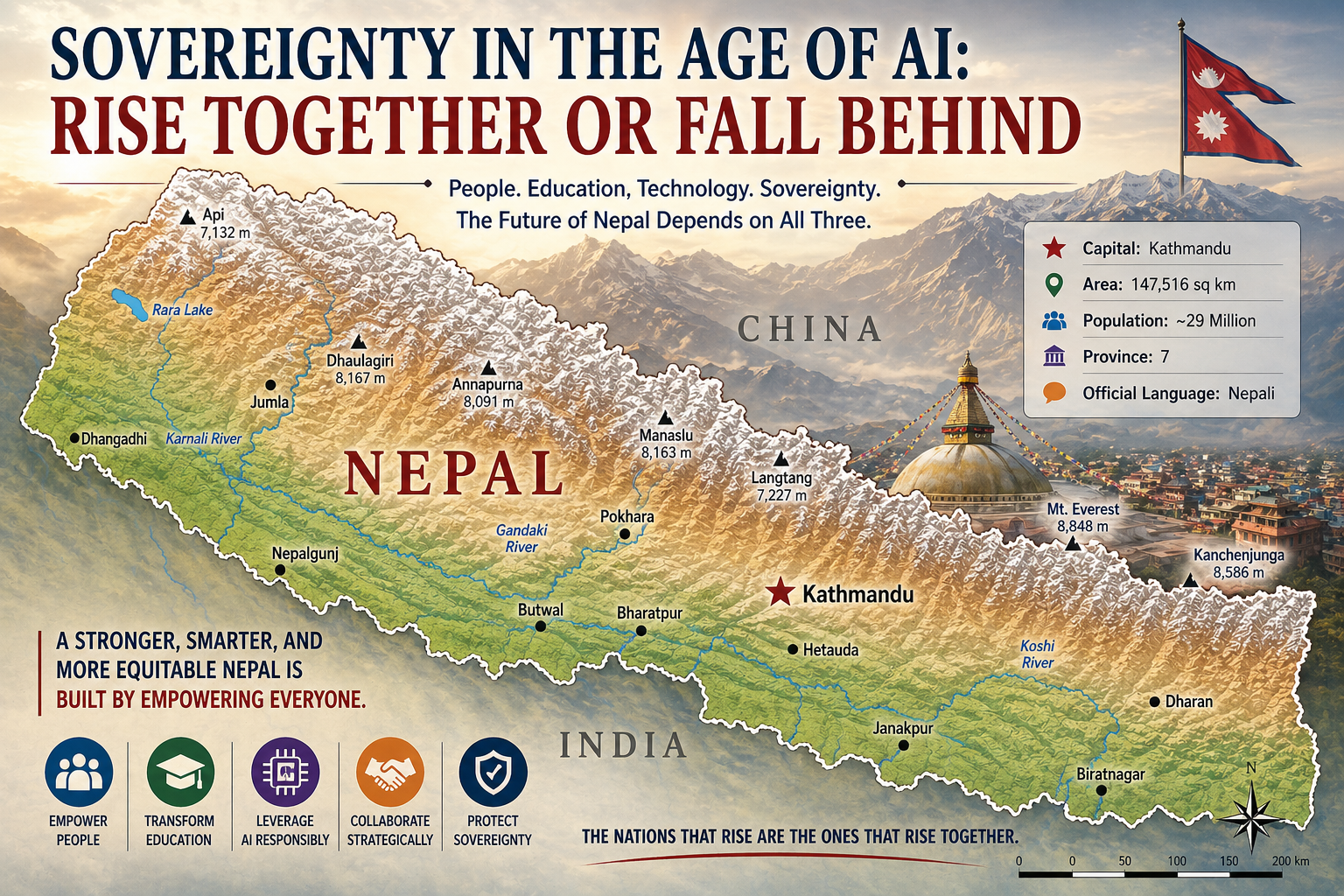
The Vision
We live in an era where power is no longer defined solely by borders, armies, or politics. Power is now digital. It lives in algorithms that shape what we see, what we believe, and how we think. It lives in data stored far beyond our borders and in systems we depend on—but do not control.
When the digital backbone of a nation exists outside its own reach, we must ask: Are we truly sovereign? Or are we handing over control to forces we can neither see nor question? This is not a distant threat; it is our current reality. Yet, while external pressure grows, an internal divide is deepening. Progress is not being shared equally.
The Great Equalizer: Democratizing Knowledge
The true promise of the AI era is the democratization of knowledge. For the first time, we have the tools to bridge the historic gap between urban centers and rural communities. For decades, English was the gatekeeper of global knowledge. AI is breaking that lock, allowing a farmer in a remote village to access world-class expertise in their native tongue through voice-activated systems. We are moving toward a world where a mountain clinic or a rural school has the same access to "expert" insights as a city hub. By removing the intellectual hurdle, we empower the rural citizen to be an active participant in the national economy.
The Hidden Crisis of the Mid-Career Worker
While we look to the future, we must not overlook those currently in the heart of their careers. The "sandwich generation"—carrying the weight of both children and aging parents—is being asked to adapt overnight. Many struggle, not for a lack of ability, but because the system was not designed for them.
Physical barriers like weak eyesight and crushing time constraints are real. If we leave this unaddressed, a new divide will be born—not of effort, but of access. We must focus on valuing "contextual wisdom" over mere "tech fluency." , using micro-credentials and on-the-job AI training and younger workers sharing digital skills while mid-career professionals mentor on ethics and institutional memory.
Sovereignty Through Capability
In a nation like Nepal, mid-career professionals are the keepers of our institutional knowledge. Technology should not be a reason for retirement; it should be an amplifier for their hard-earned expertise. For a small country situated between powerful neighbors like India and China, the stakes are high. Our academic institutions are the foundation of our sovereignty. But building AI-enabled infrastructure independently is beyond our immediate reach. If we isolate ourselves, we fall behind—weakening from within. If we depend entirely on external systems, we lose control—weakening from without.
The answer is strategic collaboration combined with deliberate self-strengthening. We must partner with global leaders as participants in innovation, while investing deeply in our own people—across every sector and every generation.
A Choice of Direction
We must reskill. We must upskill. We must make people AI-capable—not just the young or the privileged, but everyone. Technology without inclusion creates inequality, and inequality becomes instability. If we proceed without strategy, small nations will disappear from relevance. Sovereignty in the digital age is about building capability. And capability comes from people. We must choose: to connect with the world without being controlled by it, and to move forward without leaving our people behind. The nations that truly survive this era will not be those with the most powerful machines, but those that empower every human being to rise with them.
Editing required in translation
डिजिटल सीमाना: सार्वभौमिकता र मानव क्षमता
दृष्टिकोण
हामी यस्तो युगमा बाँचिरहेका छौँ जहाँ शक्ति अब केवल सिमाना, सेना वा राजनीतिद्वारा परिभाषित हुँदैन। शक्ति अब डिजिटल बनेको छ। यो हामीले के देख्छौँ, के विश्वास गर्छौँ, र कसरी सोच्दछौँ भन्ने कुरालाई आकार दिने एल्गोरिदमहरूमा बस्छ। यो हाम्रो सिमानाभन्दा धेरै टाढा भण्डारण गरिएको डाटामा र हामी निर्भर हुने तर नियन्त्रण नगर्ने प्रणालीहरूमा बस्छ।
जब कुनै राष्ट्रको डिजिटल मेरुदण्ड आफ्नै पहुँचभन्दा बाहिर हुन्छ, हामीले प्रश्न गर्नुपर्छ: के हामी साँच्चै सार्वभौम छौँ? वा हामीले आफूले देख्न वा प्रश्न गर्न नसक्ने शक्तिहरूलाई नियन्त्रण सुम्पिरहेका छौँ? यो कुनै टाढाको खतरा होइन; यो हाम्रो वर्तमान यथार्थ हो। तर बाह्य दबाब बढ्दै जाँदा आन्तरिक विभाजन पनि गहिरिँदै छ। प्रगति समान रूपमा बाँडिएको छैन।
महान समानकर्ता: ज्ञानको लोकतन्त्रीकरण
एआई युगको वास्तविक सम्भावना भनेको ज्ञानको लोकतन्त्रीकरण हो। पहिलो पटक, हामीसँग ऐतिहासिक रूपमा शहर र ग्रामीण समुदायबीचको दूरी कम गर्ने उपकरणहरू छन्। दशकौँसम्म अंग्रेजी विश्वव्यापी ज्ञानको प्रवेशद्वार (गेटकीपर) थियो। एआईले त्यो ताला तोडिरहेको छ, जसले टाढाको गाउँमा रहेको किसानलाई आवाज-सञ्चालित प्रणालीमार्फत आफ्नै मातृभाषामा विश्वस्तरीय विशेषज्ञता पहुँच गर्न सक्षम बनाइरहेको छ। हामी यस्तो संसारतर्फ अघि बढिरहेका छौँ जहाँ पहाडी क्लिनिक वा ग्रामीण विद्यालयले पनि शहरको केन्द्र जत्तिकै “विशेषज्ञ” ज्ञान प्राप्त गर्न सक्छ। बौद्धिक अवरोध हटाएर, हामी ग्रामीण नागरिकलाई राष्ट्रिय अर्थतन्त्रमा सक्रिय सहभागी बन्न सक्षम बनाउँछौँ।
मध्य-क्यारियर श्रमिकको लुकेको संकट
भविष्यतर्फ हेर्दा, हामीले अहिले आफ्नो करियरको मध्य भागमा रहेका व्यक्तिहरूलाई बेवास्ता गर्नु हुँदैन। “स्यान्डविच पुस्ता”—बालबालिका र वृद्ध अभिभावक दुवैको जिम्मेवारी बोकेको पुस्ता—लाई एकैचोटि परिवर्तनसँग अनुकूल हुन भनिएको छ। धेरैले क्षमता नभएर होइन, तर प्रणाली उनीहरूका लागि डिजाइन नगरिएकाले संघर्ष गरिरहेका छन्।
कमजोर दृष्टि र समयको अत्यधिक अभावजस्ता भौतिक बाधाहरू वास्तविक छन्। यदि हामीले यसलाई सम्बोधन गरेनौँ भने, नयाँ विभाजन जन्मिनेछ—मेहनतको होइन, पहुँचको। हामीले “प्राविधिक दक्षता” भन्दा “सन्दर्भजन्य ज्ञान (contextual wisdom)” लाई मूल्य दिनुपर्छ। माइक्रो-क्रेडेन्सियल, काममै आधारित एआई तालिम, र युवाहरूले डिजिटल सीप बाँड्ने तथा मध्य-क्यारियर पेशेवरहरूले नैतिकता र संस्थागत स्मृति सिकाउने प्रणाली आवश्यक छ।
क्षमतामार्फत सार्वभौमिकता
नेपालजस्तो देशमा मध्य-क्यारियर पेशेवरहरू हाम्रो संस्थागत ज्ञानका संरक्षक हुन्। प्रविधि उनीहरूका लागि अवकाशको कारण होइन, बरु उनीहरूको लामो अनुभवलाई अझ शक्तिशाली बनाउने माध्यम हुनुपर्छ।
भारत र चीनजस्ता शक्तिशाली छिमेकीबीच अवस्थित सानो देशका रूपमा हाम्रो स्थिति संवेदनशील छ। हाम्रो शैक्षिक संस्थाहरू हाम्रो सार्वभौमिकताको आधार हुन्। तर एआई-सक्षम पूर्वाधार स्वतन्त्र रूपमा विकास गर्नु तत्कालका लागि हाम्रो पहुँचभन्दा बाहिर छ। यदि हामी अलग बस्यौँ भने हामी पछि पर्नेछौँ—भित्रैबाट कमजोर हुँदै। यदि हामी पूर्ण रूपमा बाह्य प्रणालीमा निर्भर भयौँ भने हामी नियन्त्रण गुमाउनेछौँ—बाहिरबाट कमजोर हुँदै।
यसको उत्तर रणनीतिक सहकार्य र सचेत आत्म-सुदृढीकरण हो। हामीले विश्वव्यापी नेताहरूसँग नवप्रवर्तनका सहभागीका रूपमा साझेदारी गर्नुपर्छ, साथै प्रत्येक क्षेत्र र प्रत्येक पुस्तामा आफ्नै जनशक्तिमा गहिरो लगानी गर्नुपर्छ।
दिशाको छनोट
हामीले पुनःसीप (reskill) गर्नुपर्छ। हामीले सीप विस्तार (upskill) गर्नुपर्छ। हामीले मानिसहरूलाई एआई-सक्षम बनाउनु पर्छ—केवल युवा वा विशेषाधिकार प्राप्तलाई मात्र होइन, सबैलाई। प्रविधि बिना समावेशिता असमानता सिर्जना गर्छ, र असमानता अस्थिरता बन्छ। यदि हामी रणनीति बिना अघि बढ्यौँ भने साना राष्ट्रहरू सान्दर्भिकताबाट हराउनेछन्। डिजिटल युगमा सार्वभौमिकता भनेको क्षमता निर्माण हो। र क्षमता मानिसहरूबाट आउँछ। हामीले एउटा छनोट गर्नुपर्छ: विश्वसँग जोडिने तर त्यसद्वारा नियन्त्रित नहुने, र आफ्ना मानिसहरूलाई पछाडि नछोडी अघि बढ्ने। यस युगमा साँच्चिकै बाँच्ने राष्ट्रहरू ती होइनन् जससँग सबैभन्दा शक्तिशाली मेसिनहरू छन्, बरु ती हुन् जसले प्रत्येक मानवलाई उनीहरूसँगै उठ्न सक्षम बनाउँछन्।