The AI Revolution: Why Leaders Cannot Wait

AI is advancing faster than human intuition can track. Capabilities are improving on a timescale of months, not years -— a pace that makes steam power’s 70-year journey to mass adoption look glacial. ChatGPT reached 100 million users in weeks. Policymakers and citizens alike are systematically underestimating how quickly this technology will reshape society, and that miscalculation carries serious consequences.


What makes this revolution different is not just its speed, but its breadth. Steam and electricity each transformed specific industries over decades. AI is hitting virtually every sector simultaneously — healthcare, law, finance, creative work, education — leaving almost no occupation untouched. That universality is the root of public anxiety. Few jobs feel insulated, and fewer still are.


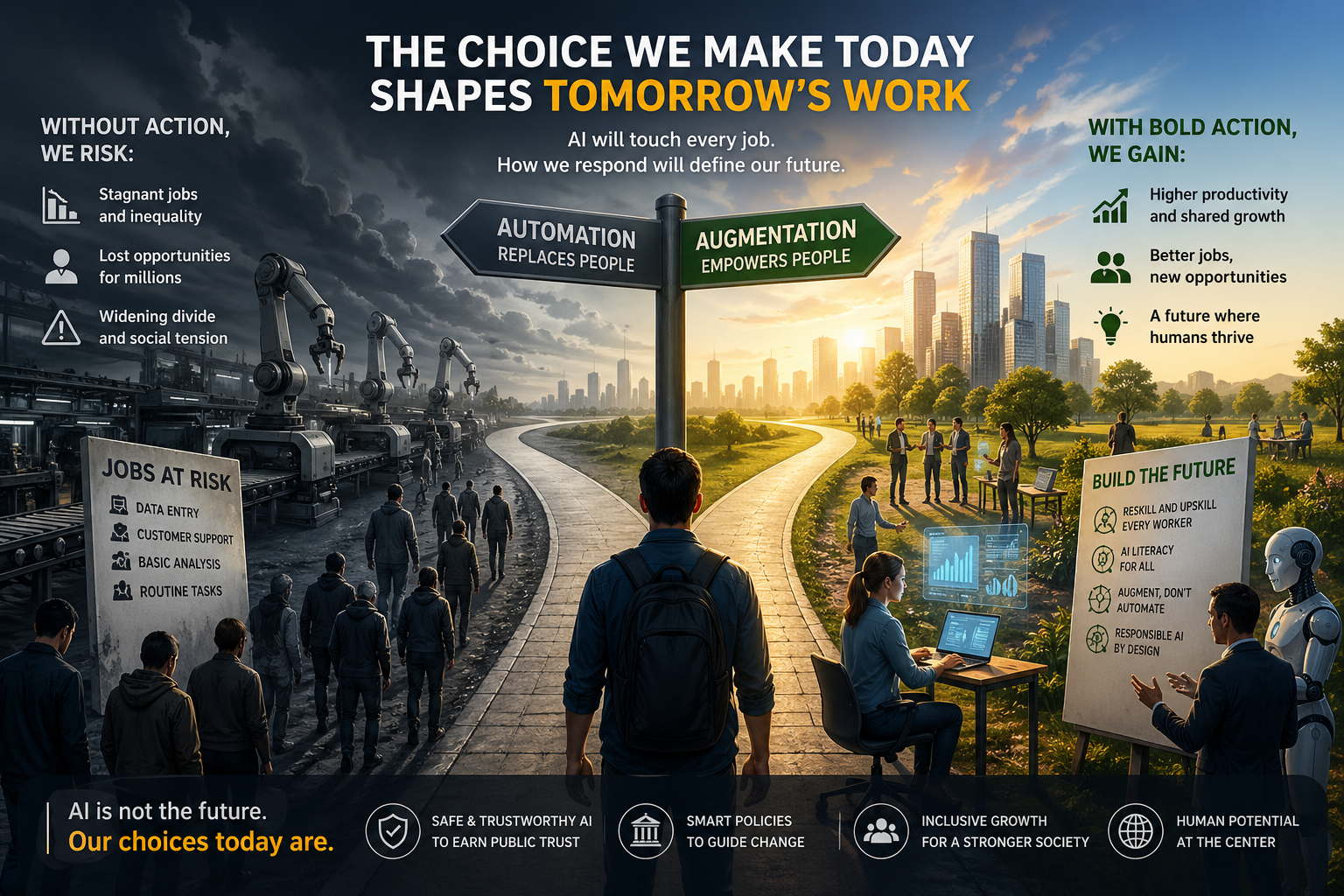
In several early cases—radiology, coding assistants, customer support—AI is augmenting rather than replacing. Some roles will  be transformed. The more immediate threat is not AI replacing workers — it is AI-literate workers replacing those without the skill. Competitive displacement, not mass unemployment, is the near-term challenge. 

The data bears this out. LinkedIn identifies AI literacy as the fastest-growing skill demanded by employers. leaders expect to grow output without growing headcount.  

Business leaders already expect to sustain revenue growth without proportional hiring — “flat is the new up.” Even absent mass layoffs, employment could stagnate for entry-level and graduate roles that once served as career launchpads. Without proactive reskilling, inequality will widen quietly and quickly. 

The desirable outcome — AI as an augmentation tool that makes workers more capable, not redundant — is not the default. There should be tax incentives for augmentation vs. automation, public funding for reskilling  and standards for AI deployment in workplaces

Augmenting workers is better for individuals, for businesses, and for long-term economic health. But the technology itself does not guarantee that outcome. Governments must act ahead of the disruption, not in response to it, creating incentives and frameworks that tip the balance toward human flourishing.


There is one further prerequisite that is easy to overlook:

Without responsible, transparent, and demonstrably safe AI development, societies will reject the technology before its benefits can be realized. Fear is not irrational — it is the predictable response to change that feels uncontrolled. Governments that fail to show citizens AI being developed safely will find that citizens block its deployment entirely.


AI is advancing faster and more broadly than any prior technological revolution. It will not simply replace most jobs, but it will change nearly all of them. The competitive pressure is already here. The hiring slowdown is already beginning. The augmentation future that benefits everyone is available — but only if leaders pursue it deliberately. This is not one priority among many. Delay is uniquely dangerous (because effects are quiet and compounding).


Before AI: A company grows revenue from $10M to $20M. To do that, they hire 50 more people. After AI: A company grows revenue from $10M to $20M. They hire 5 more people — or none at all. The company is thriving. The economy looks healthy. But the jobs that would have existed simply don’t materialise. No layoffs, no recession, no obvious villain — just a permanently smaller slice of growth flowing to workers.​​​​​​​​​​​​​​​​


Editing required


एआई क्रान्ति: किन नेतृत्वकर्ताहरू अब पर्खन सक्दैनन्

एआई मानवको सहज अनुमानले पछ्याउन सक्ने गतिभन्दा धेरै छिटो अघि बढिरहेको छ। यसको क्षमता वर्ष होइन, महिनाको समयमानमा सुधार भइरहेको छ—यस्तो गति कि भाप शक्तिले व्यापक प्रयोगमा पुग्न लागेको ७० वर्षको यात्रा अत्यन्तै ढिलो जस्तो देखिन्छ। ChatGPT ले केही हप्तामै १० करोड प्रयोगकर्ता हासिल गर्‍यो। नीति निर्मातादेखि साधारण नागरिकसम्म सबैले यो प्रविधिले समाजलाई कति छिटो रूपान्तरण गर्नेछ भन्ने कुरालाई कम आँकलन गरिरहेका छन्—र यो गलत आँकलनले गम्भीर परिणाम ल्याउन सक्छ।

यो क्रान्तिलाई फरक बनाउने कुरा केवल यसको गति मात्र होइन, यसको व्यापकता पनि हो। भाप र बिजुलीले दशकौँमा केही निश्चित उद्योगहरू परिवर्तन गरेका थिए। तर एआईले स्वास्थ्य सेवा, कानुन, वित्त, सिर्जनात्मक काम, शिक्षा लगायत लगभग सबै क्षेत्रलाई एकैचोटि असर गरिरहेको छ—प्रायः कुनै पनि पेशा अछुतो छैन। यही व्यापक प्रभावले सार्वजनिक चिन्ता बढाएको हो। थोरै कामहरू सुरक्षित देखिन्छन्, र वास्तवमा अझ कम मात्र सुरक्षित छन्।

प्रारम्भिक उदाहरणहरू—जस्तै रेडियोलोजी, कोडिङ सहायक, ग्राहक सेवा—मा एआईले कामदारलाई प्रतिस्थापन गर्नुको सट्टा सहयोग (augmentation) गरिरहेको छ। केही भूमिकाहरू रूपान्तरण हुनेछन्। तर तत्कालको ठूलो जोखिम एआईले कामदार हटाउने होइन—एआई जान्ने कामदारहरूले नजान्नेहरूलाई प्रतिस्थापन गर्ने हो। निकट भविष्यको चुनौती व्यापक बेरोजगारी होइन, प्रतिस्पर्धात्मक विस्थापन हो।

डाटाले पनि यही संकेत गर्छ। LinkedIn का अनुसार एआई साक्षरता अहिले रोजगारदाताहरूले सबैभन्दा छिटो खोजिरहेको सीप हो। धेरै व्यवसायिक नेताहरू कम कर्मचारी राखेर पनि उत्पादन बढाउने अपेक्षा राखिरहेका छन्।

अहिले व्यवसायिक नेतृत्वले अतिरिक्त कर्मचारी नथप्दै आम्दानी वृद्धि कायम राख्ने सोच बनाइरहेका छन्—“flat is the new up”। ठूलो स्तरमा जागिर गुम्ने अवस्था नभए पनि, प्रवेश–स्तर र नयाँ स्नातकहरूको रोजगारी स्थिर हुन सक्छ, जुन पहिले करियर सुरु गर्ने आधार थियो। यदि समयमै पुनःसीप विकास गरिएन भने, असमानता शान्त रूपमा तर छिटो बढ्नेछ।

आदर्श अवस्था—जहाँ एआईले मानिसलाई अझ सक्षम बनाउने उपकरणको रूपमा काम गर्छ—स्वतः हुने कुरा होइन। त्यसका लागि स्वचालनभन्दा सहयोग (augmentation) लाई प्रोत्साहन दिने कर नीति, पुनःसीप विकासका लागि सार्वजनिक लगानी, र कार्यस्थलमा एआई प्रयोगका स्पष्ट मापदण्ड आवश्यक छन्।

कामदारलाई सशक्त बनाउनु व्यक्तिगत, व्यवसायिक र दीर्घकालीन आर्थिक स्वास्थ्यका लागि राम्रो हुन्छ। तर प्रविधिले आफैं यस्तो परिणाम सुनिश्चित गर्दैन। सरकारले प्रभाव देखिनु अघि नै कदम चाल्नुपर्छ—मानिसको समृद्धिलाई प्राथमिकता दिने नीति र संरचना तयार गरेर।

यहाँ एउटा महत्वपूर्ण पूर्वशर्त पनि छ, जुन सजिलै बेवास्ता हुन सक्छ:

यदि एआई विकास जिम्मेवार, पारदर्शी र सुरक्षित रूपमा गरिएन भने, समाजले यसको फाइदा देख्नुअघि नै यसलाई अस्वीकार गर्न सक्छ। डर अव्यवहारिक होइन—यो नियन्त्रणबाहिरको परिवर्तनप्रतिको स्वाभाविक प्रतिक्रिया हो। यदि सरकारले नागरिकलाई एआई सुरक्षित रूपमा विकास भइरहेको देखाउन सकेन भने, नागरिकहरूले यसको प्रयोग नै रोक्न सक्छन्।

एआई इतिहासका कुनै पनि प्रविधि क्रान्तिभन्दा छिटो र व्यापक रूपमा अघि बढिरहेको छ। यसले सबै कामहरू हटाउने छैन, तर प्रायः सबैलाई परिवर्तन गर्नेछ। प्रतिस्पर्धात्मक दबाब सुरु भइसकेको छ। भर्तीको गति सुस्त हुन थालेको छ। सबैका लागि लाभदायक “augmentation” भविष्य सम्भव छ—तर नेतृत्वकर्ताहरूले सचेत रूपमा प्रयास गरे मात्र।

यो धेरै प्राथमिकतामध्ये एउटा मात्र होइन—ढिलाइ गर्नु विशेष रूपमा खतरनाक छ, किनकि यसको प्रभाव शान्त तर निरन्तर रूपमा जम्मा हुँदै जान्छ।

एआईभन्दा अघि: कुनै कम्पनीले आम्दानी १० मिलियनबाट २० मिलियन पुर्‍याउँदा ५० जना नयाँ कर्मचारी राख्थ्यो।
एआईपछि: त्यही वृद्धि गर्न ५ जना—वा एक जना पनि—नयाँ कर्मचारी आवश्यक नपर्न सक्छ।

कम्पनी सफल देखिन्छ। अर्थतन्त्र स्वस्थ देखिन्छ। तर जुन रोजगारीहरू सिर्जना हुनुपर्ने थियो, ती कहिल्यै जन्मिँदैनन्। न ठूलो छटनी हुन्छ, न मन्दी, न कुनै स्पष्ट दोषी—तर विकासको ठूलो हिस्सा अब कामदारसम्म नपुग्ने स्थायी अवस्था बन्छ।