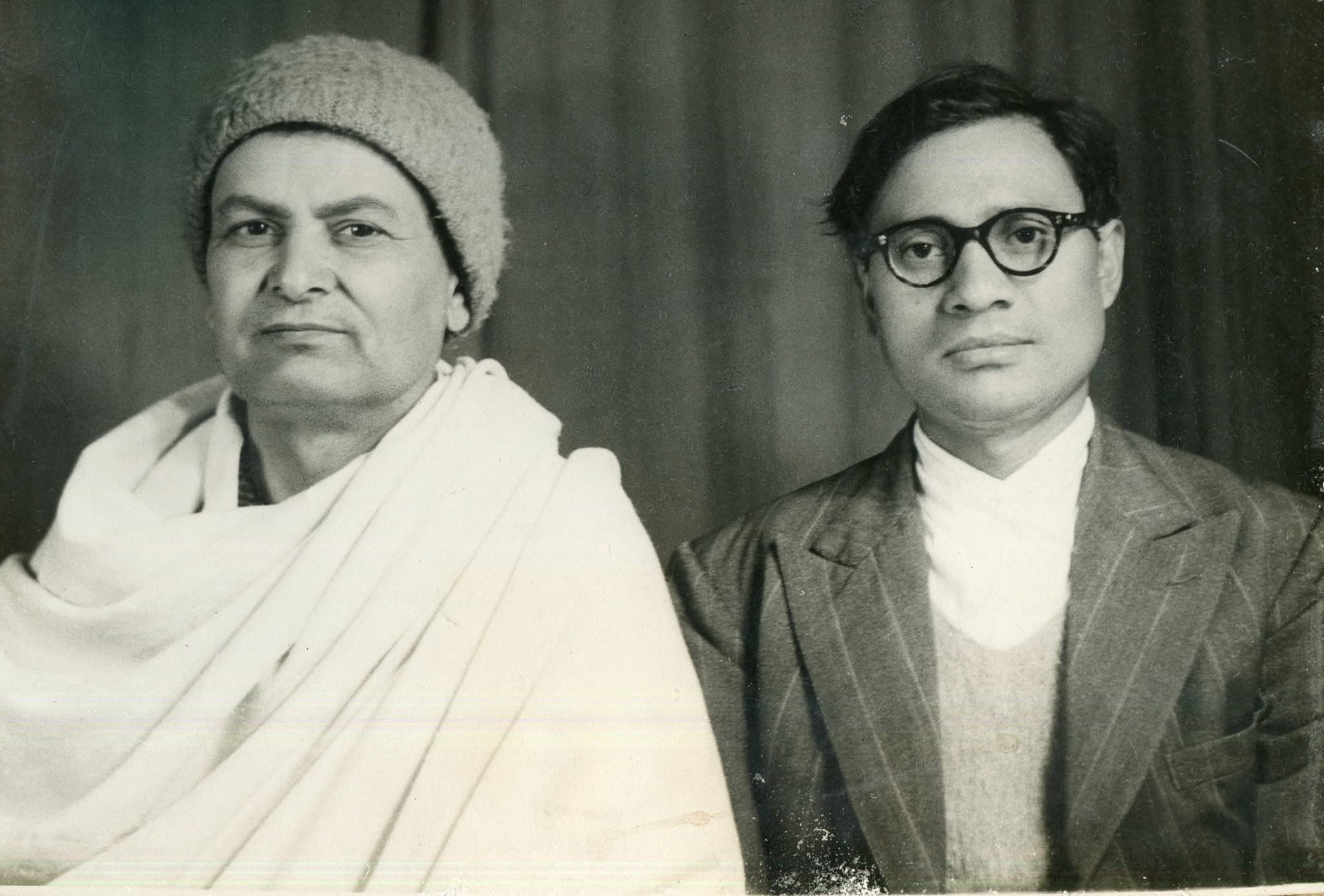
When devastating floods and sudden surges strike the fragile corridors of the Trans-Himalayan region, the public dialogue predictably turns toward climate change, modern infrastructure gaps, and emergency response mechanics. Yet, lost in the immediate aftermath of these recurring catastrophes is a deeper structural failure: the disconnect between centuries of documented observation and contemporary disaster management.
Long before satellite imagery, remote sensing, and formal meteorological departments existed, travelers, scholars, and political exiles walked the hazardous tracks connecting the Kathmandu Valley, Tibet.. Figures like Dharma Ratna Yami and Mahapandit Rahul Sankrityayan did far more than write travelogues or socio-political commentary—they recorded vivid, empirical accounts of an volatile landscape. That their observations remain largely isolated inside literature departments rather than integrated into Earth Sciences and Disaster Risk Reduction (DRR) curricula represents a profound missed opportunity for regional safety.
The Literary Archives of Mountain Hazards
During the mid-20th century, while enduring political persecution, imprisonment, and harsh travel conditions across high-altitude passes, Dharmaratna Yami penned works such as Sandeya LIsa (Newari Bhasa language ) and The Reply from Tibet. Lhasa Bolchhe(Nepali ). Originally written in Nepal Bhasa, the text captures not only the socio-political realities of his journey along the ancient trade routes to Lhasa, but also detailed descriptions of the treacherous terrain. Yami documented unpredictable river surges, freezing blizzards, unstable scree slopes, and the constant threat of sudden mountain flooding.
Similarly, Rahul Sankrityayan, widely regarded as the pioneer of Hindi travel literature, traversed Tibet, Kinnaur, Spiti, and Ladakh on foot multiple times in the early 1900s. In works like Meri Ladakh Yatra, Kinnar Desh Mein, and Himalaya Parichay, Sankrityayan provided meticulous socio-geographic records of glacial topographies, seasonal thaw cycles, and human survival strategies in extreme environments.
These writers left behind an invaluable historical baseline. They showed that extreme Himalayan events—flash floods, cloudbursts, and rapid erosion—are not anomalous surprises of the modern era, but intrinsic features of the Trans-Himalayan ecosystem that require permanent systemic adaptation.
The Educational Deficit: Science Without History
Despite this rich archive, conventional secondary and tertiary educational systems treat science and humanities as strictly segregated disciplines.
1. De-contextualized Science: Textbooks frequently teach glaciology, hydrology, and plate tectonics using abstract formulas or distant global examples, omitting the local historical memory of how these forces have interacted with human settlements over generations.
2. Marginalized Literature: Literary works by figures like Yami and Sankrityayan are taught primarily for their prose, linguistic merit, or historical politics, while their operational environmental insights are ignored.
By failing to teach these historical texts in Earth Science classes, educational institutions allow each generation to reset its understanding of mountain risks, treating natural hazards as novel events rather than recurring cycles.
A Integrated Framework for Curricula Reform
To bridge this divide, curriculum designers and educational policy makers must adopt a multidisciplinary approach that blends historical literature, indigenous knowledge, and modern Earth Sciences.
Rediscovering Generational Memory
Disaster risk reduction cannot rely solely on real-time sensors and post-disaster relief. True resilience requires institutionalizing generational memory. When students read about the hardship of high-altitude travel and environmental hazards in the prose of Dharmaratna Yami and Rahul Sankrityayan—and simultaneously study the physical mechanics of those hazards in science class—the mountain landscape stops being an abstract backdrop. It becomes a dynamic environment requiring respect, historical literacy, and proactive stewardship. Bringing historical Trans-Himalayan literature into the science classroom ensures that the lessons paid for in the early 20th century do not have to be relearned through tragedy in the 21st.