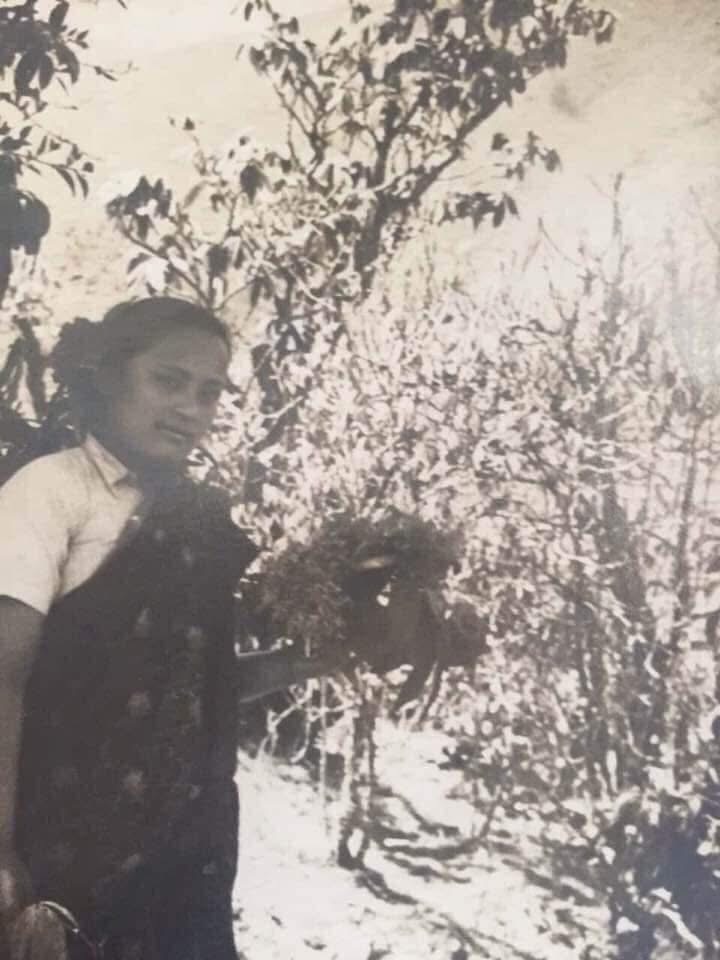
In mid-20th-century Nepal, natural calamities, epidemics, and sudden economic hardships were rarely treated as physical or biological events. Under the restrictive Rana regime, formal education was systematically denied to the public, creating an empirical vacuum. In this void of knowledge, fear flourished. Natural disasters were routinely framed as divine wrath or supernatural retribution—a narrative carefully curated by feudal elites and spiritual gatekeepers to maintain structural control.
When hardship struck, vulnerable families were persuaded, and often coerced, into surrendering their scarce financial resources and lands for costly appeasement rituals. Fear-mongering was not an innocent cultural artifact; it was an institutionalized mechanism of financial extortion and social subjugation.
Amidst this landscape of enforced fatalism emerged Heera Devi Yami (1921–1970)—a radical reformer, freedom fighter, and educational visionary. She recognized a fundamental truth that remains strikingly relevant today: when fear replaces reason, belief becomes a tool of control. But while many political dissidents focused exclusively on changing rulers, Heera Devi understood that real liberation required dismantling the intellectual bondage that kept the public obedient to manipulators. Her strategic response was as bold as it was quiet: she chose education as the ultimate weapon of resistance.
The Indestructible Shield
Living through political persecution, state-enforced poverty, property confiscations, and imprisonment alongside her husband, the revolutionary writer Dharma Ratna Yami, Heera Devi made a crucial observation. Material possessions, titles, and legal rights could be seized by autocratic authorities at any moment. However, an educated mind, critical thinking skills, and intellectual literacy could never be retroactively disarmed or stolen.
She established covert classrooms for women, marginalized groups, and the children of poor farmers, teaching them that literacy was not merely a civic skill, but an act of self-defense. By learning to observe cause, effect, and physical evidence, ordinary citizens could strip away the monopoly on truth held by superstitious exploiters. Once a person understands why a river floods or why an illness spreads, the arbitrary authority of the fraudster collapses.
Beyond Literacy: The Vision for STEM
Ahead of her time, Heera Devi foresaw that basic reading and writing were insufficient to pull a feudal society into the modern world. To break centuries of entrenched fatalism, a nation required applied scientific understanding, empirical reasoning, and technical competence—the foundation of what we now classify as STEM (Science, Technology, Engineering, and Mathematics) disciplines.
Natural disasters demanded structural engineering and geological awareness, not desperate financial offerings. Epidemics required public health protocols and biological science, not social ostracization. Economic stagnation required mathematical literacy and industrial skill, not passive resignation.
Crucially, she placed special emphasis on the scientific education of women. In traditional households, mothers were the primary custodians of cultural norms, health practices, and domestic rituals. Heera Devi understood that if women remained trapped in superstition, the home would remain a fortress of fear-based manipulation. Conversely, an educated woman trained in rational thinking and practical skills would insulate her family against fear-mongering, breaking the cycle of exploitation at its root.
An Enduring Legacy for Today
Heera Devi Yami’s struggle was often lonely and deeply misunderstood by the conservative society of her era. Yet, her foresight lay in choosing a long-term strategy. By embedding her advocacy within educational legacy rather than transient political rhetoric, she ensured that her vision would outlive the autocrats of her day.
Her life established a timeless standard: Fear is not faith. Blind obedience is not spirituality. And unexplained events are not evidence of supernatural forces.
As modern society confronts new iterations of misinformation, fear-mongering, and algorithmic manipulation, Heera Devi Yami’s blueprint remains urgent. We owe our ancestors compassion for surviving under harsh social conditions, but we owe future generations the courage to question, investigate, and replace fear-based manipulation with scientific literacy, critical inquiry, and genuine human dignity.
Artificial Intelligence and the Democratization of History
The intersection of artificial intelligence and historical preservation creates a powerful convergence. For decades, the struggles of early reformers like Heera Devi Yami were constrained by physical archives, oral histories, and localized narratives that feudal or conservative systems could easily marginalize or ignore. AI changes this landscape fundamentally.
Artificial intelligence serves as an equalizer of history, capable of making past exploitative systems transparent to modern youth in several key ways:
-
Dismantling Information Monopolies: Feudal power structures rely on controlling access to knowledge. Generative tools synthesize fragmented historical records, personal memoirs, and suppressed narratives, surfacing how fear-mongering and extortion functioned in practice.
-
Pattern Recognition Across Generations: AI models allow young thinkers to connect historical exploitation (such as using natural disasters to demand costly rituals) with modern manipulation (such as algorithmic misinformation or digital fear-mongering). The mechanics of control remain identical; only the medium changes.
-
Democratizing Legacy: By digitizing, analyzing, and translating regional historical accounts, AI ensures that pioneering advocates of rationalism, scientific literacy, and female empowerment become globally accessible case studies in ethical courage rather than forgotten local footnotes.
Heera Devi Yami fought to break intellectual bondage when the tools of dissemination were limited to hidden classrooms and quiet advocacy. Equipping today's youth with AI and data-driven inquiry honors her foundational thesis: when empirical truth becomes visible and accessible to all, exploitative systems lose their power to control.