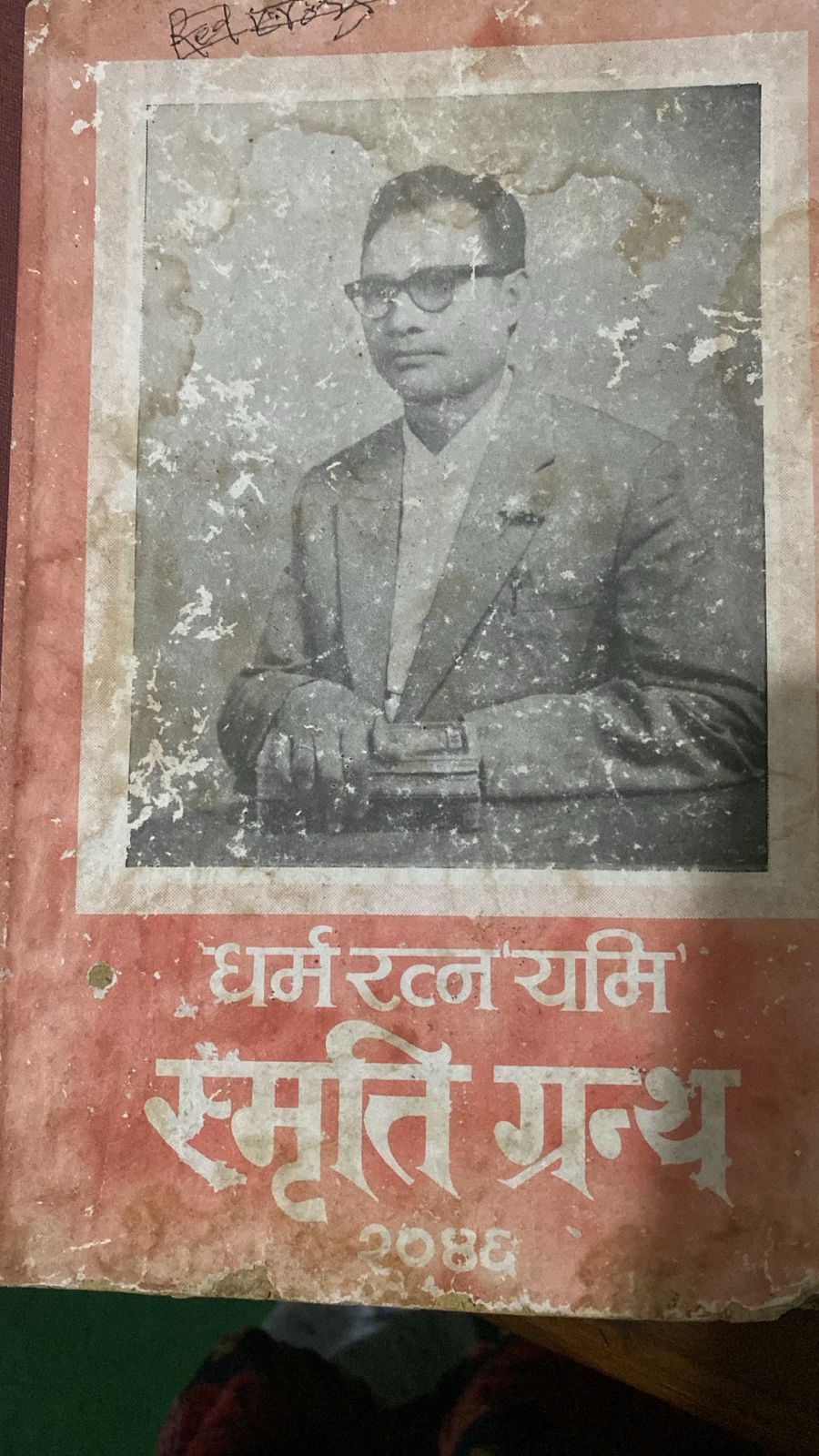
Throughout history, societies have often failed to recognize the value of individuals who challenge accepted beliefs and encourage people to think differently. Many reformers, philosophers, and intellectuals were criticized during their lifetimes, only to be appreciated generations later. In Nepal, Dharma Ratna Yami was one such figure — a courageous thinker, writer, and social reformer whose ideas were far ahead of his time.
Dharma Ratna Yami questioned social injustice, caste discrimination, blind faith, and systems of inequality at a time when speaking openly against entrenched traditions required extraordinary courage. He believed in rational thinking, human dignity, education, and social reform. His writings reflected a deep concern for justice and a vision of a more equal and enlightened society.
However, societies often resist people who challenge dominant narratives. Many individuals are taught from childhood to obey authority without questioning it. When someone speaks critically about social structures, religion, caste, or power, fear and misunderstanding can easily be used against them. As a result, efforts were often made to isolate or discredit thinkers like Dharma Ratna Yami so that their influence would not grow widely within society.
He wrote books and expressed ideas that many people of his generation were not prepared to fully understand. His intellectual contributions were overlooked by some because his thinking extended beyond the social and political mindset of that era. Like many visionary thinkers around the world, he faced misunderstanding before recognition.
Misinformation and social conditioning also played a role in shaping public opinion against reformers. In societies with limited access to education and open debate, rumors and selective narratives can strongly influence how people perceive intellectuals who question traditional authority. Instead of engaging deeply with his ideas, many dismissed him because society itself was not yet ready for the conversations he was trying to initiate.
Yet history often changes its judgment over time. Ideas once considered radical later become recognized as necessary steps toward social progress. Today, Dharma Ratna Yami’s writings and contributions hold important historical and intellectual value for those interested in democracy, social justice, equality, and critical inquiry in Nepal.
His life reminds us that true thinkers are not always immediately celebrated. Sometimes they walk alone because they see realities that society is still unwilling to confront. Being ahead of one’s time can bring criticism, isolation, and misunderstanding. But it can also leave behind a legacy that inspires future generations to question, learn, and strive for a more just society.
In the modern age — where misinformation and disinformation continue to shape public opinion in new ways — the importance of critical thinking becomes even more relevant. Remembering thinkers like Dharma Ratna Yami is not only about honoring the past. It is also about encouraging future generations to value reason, courage, compassion, and intellectual freedom.