We like to believe that history moves in a straight, predictable line toward progress. We tell ourselves that brilliant ideas are naturally recognized, that truth eventually wins by default, and that open societies naturally embrace those who push them to be better.
But history tells a far messier story.
Throughout the centuries, the individuals who looked at the world with absolute clarity—and refused to look away—were rarely given standing ovations. Instead, they were met with walls of silence, weaponized rumors, and institutional exile. They walked alone not by choice, but because they saw realities that their contemporaries were simply terrified to confront.
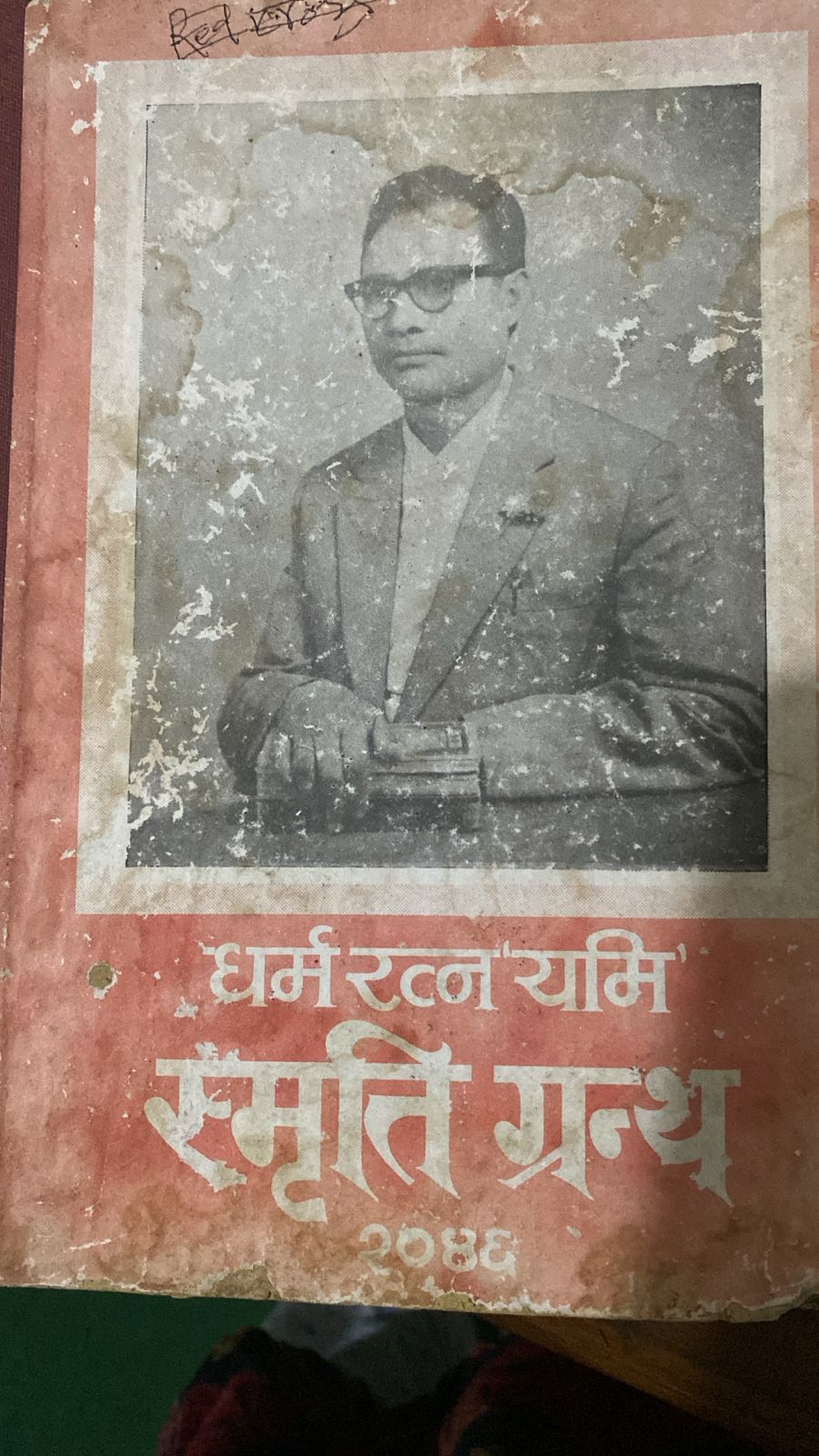
In the context of Nepal’s intellectual and social evolution, few figures embody this heavy burden of the pioneer quite like Dharma Ratna Yami (1915–1975). A fierce anti-Rana revolutionary, a multilingual author of over twenty books, and a deeply nonconformist social reformer, Yami spent his life engineering a psychological awakening in a society designed to keep people asleep.
And yet, his struggle is not just a chapter of history. His life provides a vital, urgent blueprint for how we navigate truth, manipulation, and critical thinking in today’s digital age.
1. The Anatomy of Resistance: Why Societies Fight the Visionary
Why is a progressive thinker so deeply feared during their lifetime?
When Dharma Ratna Yami began openly challenging caste discrimination, untouchability, and blind dogma in the mid-20th century, he wasn’t just arguing against ideas—he was threatening an entire socio-political architecture.
Societies rely heavily on social conditioning. From childhood, individuals are conditioned to equate obedience with morality and authority with truth. When a reformer steps forward and asks a foundational "Why?", it creates an existential friction. For those whose comfort, identity, or power depends on the existing structure, that question is treated as an act of subversion.
When Yami was appointed Deputy Minister in 1951, he famously attempted to shatter the caste hierarchy through direct action. He hired a cook from the marginalized Pode community for his kitchen and later hosted a grand feast for political leaders and relatives. Those who didn’t know the cook's caste ate freely; those who found out fled in panic.
This radical act was meant to expose the absurdity of untouchability, but it also illustrated a harsh truth: when a society lacks the tools or readiness to engage with systemic critique, it defaults to defensive mechanics. Instead of debating his ideas, the status quo weaponized rumors against him, famously attempting to brand him as a "madman" to neutralize his influence.
2. Weaponized Misinformation: An Ancient Tool in Modern Garb
It is easy to look back at the hostility Yami faced—including the banning and confiscation of his critical history book Nepāl kā Kurā by the post-Rana government—and dismiss it as a byproduct of a less educated, less connected era.
But that is a dangerous miscalculation. The mechanics used to isolate thinkers in the 20th century have not vanished; they have simply scaled up.
| The 20th-Century Strategy | The Digital Age Equivalent |
| Social Isolation: Physically isolating a reformer or banning their texts to prevent their ideas from spreading. | Algorithmic Echo Chambers: Content algorithms feeding users only what comforts them, effectively burying alternative viewpoints. |
| Character Assassination: Spreading localized rumors and branding the thinker as "insane" or "subversive." | Digital Disinformation: High-velocity, coordinated online smear campaigns designed to hijack emotion and kill nuance. |
| Rote Conformity: Educational systems focusing on blind compliance to authority structures. | Passive Consumption: Mindlessly scrolling through algorithmic feeds without checking sources or structural logic. |
Misinformation has always been the primary weapon used against critical inquiry. In the past, it thrived on a scarcity of information and localized rumors. Today, it thrives on an overwhelming surplus of information, where outrage is monetized and deep intellectual engagement is replaced by reactionary clicks.
3. The "Observer Mindset" as Modern Digital Hygiene
If Dharma Ratna Yami’s legacy teaches us anything, it is that true intellectual freedom requires what we might call an Observer Mindset—the capacity to step back from the collective noise, evaluate reality through rigorous logic, and possess the moral courage to stand by the truth, even if it means standing completely alone.
In the digital era, practicing this mindset is the ultimate form of Digital Hygiene. It means recognizing that your attention is being engineered and your biases are being mined.
To honor the trail blazers who fought for intellectual freedom, we must actively practice the critical thinking they championed. Before reacting to a headline, a post, or a rumor, step back. Ask: Who benefits from me feeling angry right now? What is the missing context? Just because an idea is widely accepted or structurally dominant within your online circle doesn't make it true. Challenge the consensus. Seek out the "banned books" of ideas—the nuanced, complex perspectives that don't fit neatly into a 15-second video or a polarizing social media post.
The Patience of History
History is a slow, patient judge. The ideas that Dharma Ratna Yami wrote into his epics and essays—ideas once labeled radical, dangerous, or ahead of their time—are today recognized as the foundational stones of a just, compassionate, and democratic consciousness.
The visionaries of the past walked lonely paths so that future generations could breathe in a more enlightened world. Today, our challenge is different but no less critical. We do not have to fight for the right to speak; we have to fight for the capacity to think clearly amidst the chaos.
Remembering our reformers is not a passive act of honoring the past. It is an active commitment to carry their torch—by refusing to be manipulated, by choosing reason over echo chambers, and by fiercely maintaining the courage to think for ourselves.