Today, public advocacy, political representation, and women’s organizations are vibrant, accepted pillars of Nepal’s democracy. Yet, nearly eight decades ago, the simple act of a few women gathering in a single room was viewed as a radical threat to the state.
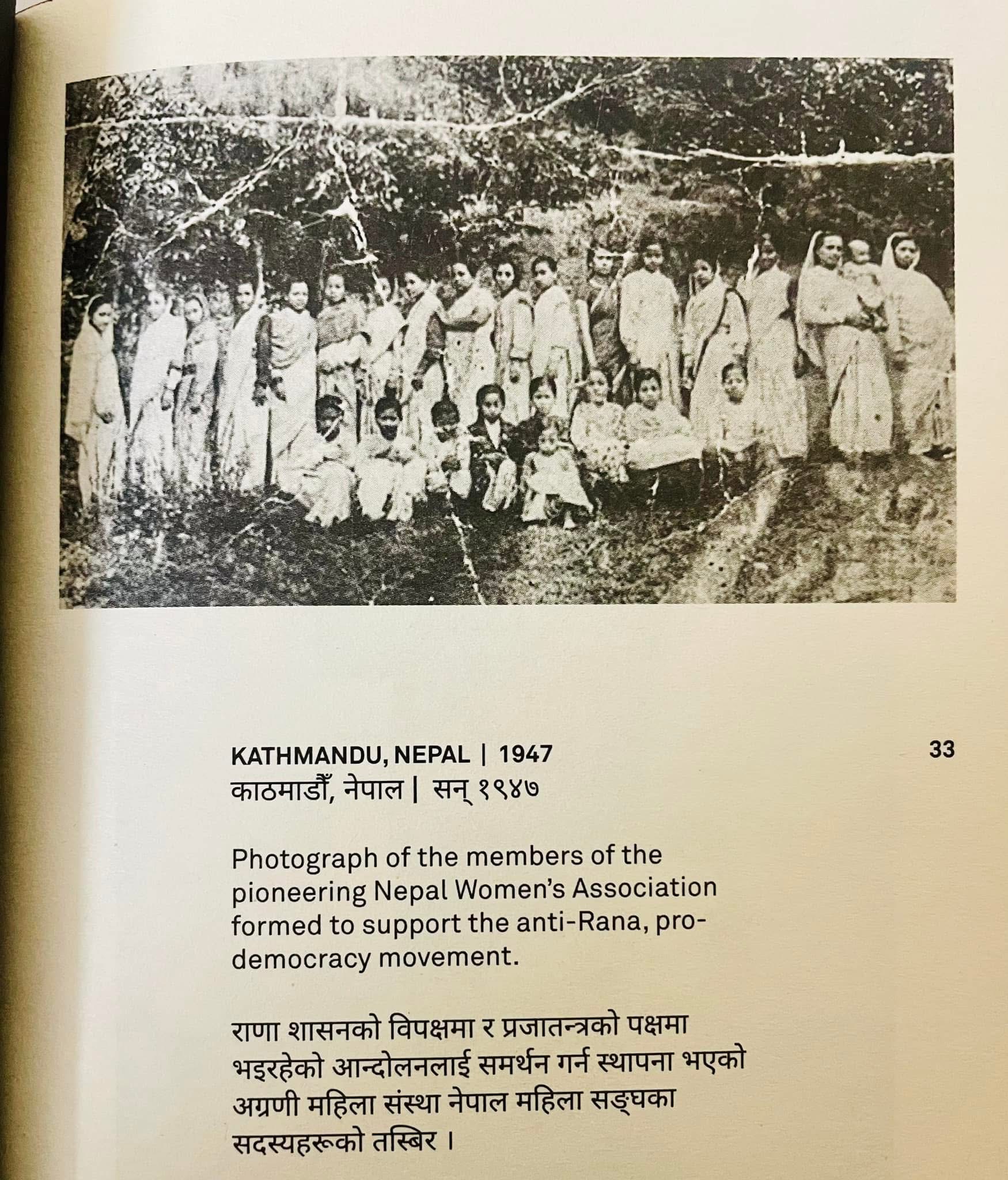
On 23rd Bhadra, Bikram Samvat 2003, September 8, 1946 AD (Sunday), during the autocratic Rana regime, a clandestine meeting took place in Kathmandu. This gathering would alter the course of the nation's history, sparking organized women’s activism and birthing the historic Nepal Women’s Association.
At the heart of this quiet revolution were fearlessly dedicated women. Among them was Heera Devi Yami, who was constantly seen running around, secretly contributing to the struggle against the regime while carrying and breastfeeding her infant child, Dharma Devi. Alongside her were Prem Lata Tuladhar (sister of Prem Bahadur Kansakar ) and a fearless women who dared to demand voting rights, education, freedom of expression, and a voice in public life.
A Clandestine Assembly in the Torrential Rain
The stakes could not have been higher. The Rana authorities maintained a suffocating grip on society, monitoring any assembly that carried even a whisper of political dissent.
To evade the state's watchful eyes, the activists chose a day when heavy rain blanketed Kathmandu. The downpour proved to be a perfect shield, blurring the vision of government informers and spies. Slipping through the deluged streets, the women arrived discreetly at the residence of Prem Bahadur Kansakar in Masan Galli, Kel Tole. From there, they were escorted to a secondary, secluded location—the Mhayepi Jungle—for a Ban Bhoj (picnic) to celebrate and mark the formal initiation of the first Nepal Women's Association. It was there that a historic group photograph was taken. Every woman who stood before that lens knowingly risked surveillance, interrogation, and imprisonment simply by existing in the frame.
The Dangerous Literacy of Prem Lata Tuladhar
One of the regime's most effective tools of oppression was the denial of education to women. Because formal schooling was forbidden to them, the vast majority of women at the time could neither read nor write.
As the movement gained momentum, keeping records of their strategy sessions became both vital and incredibly dangerous. If discovered, written words were ironclad evidence of treason. For prominent leaders like Heera Devi Yami, penning the documents herself meant leaving a direct paper trail for the authorities.
The task required individuals like Prem Lata Tuladhar, who possessed the rare and valuable ability to write. In an era of enforced ignorance, a pen in the hand of a young girl was a revolutionary weapon. Tasked with recording the minutes of these high-stakes meetings, Tuladhar quietly documented the movement's proceedings and continued to preserve these narratives as she grew up. Her role was not merely secretarial; it was a high-wire act of historical preservation that shielded senior leaders from immediate arrest.
Raids, Ruin, and Lost History
Living as an activist under the Rana regime meant enduring constant psychological warfare. Messages had to be memorized and whispered; documents had to be buried or burned. A single informant could destroy the entire network.
The fear was entirely justified. During one aggressive raid, the authorities breached a safe house and confiscated a treasure trove of the association's meeting minutes and records.
This systemic suppression explains why so much of Nepal’s early women’s movement remains undocumented. Much of their history was intentionally left unwritten to survive, while the rest was lost to state seizures or destroyed to protect the innocent.
Preserving a Fearless Legacy
Today, the genesis of Nepal’s women’s movement survives largely through oral histories, fragile family memories, and community folklore. As time passes, the urgency to formally document these stories grows.
The secret meeting that began in the Masan Galli rain and moved to the depths of the Mhayepi Jungle is more than a relic of the past; it is a foundational pillar of Nepal’s democratic heritage. It stands as a timeless reminder that profound societal progress is not born of convenience, but forged by ordinary people who choose courage over comfort, and action over silence.