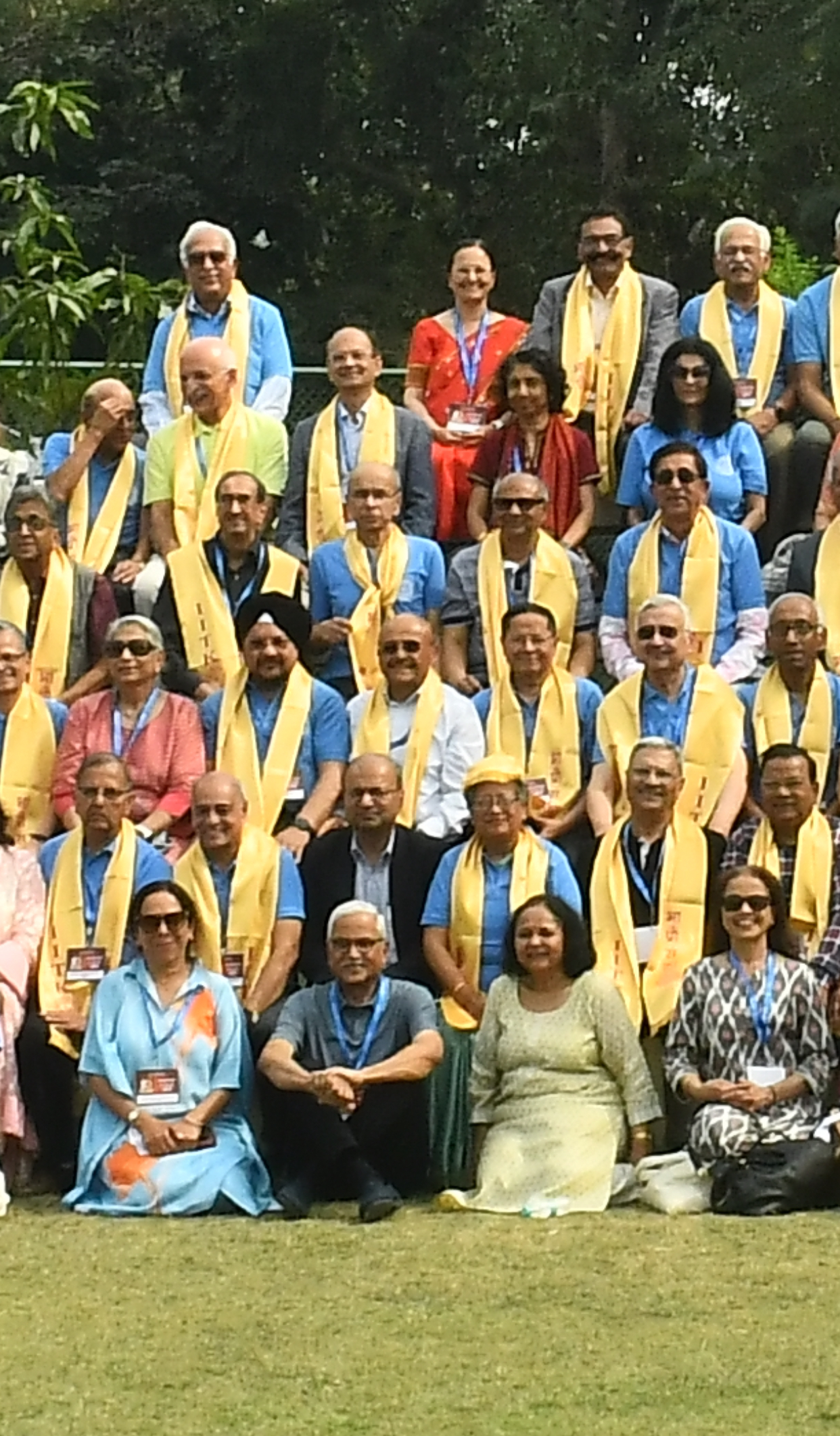
The recent tragedy involving an IIT student brought back many memories from my own IIT Kanpur days. I remember occasions when an IIT student had died and fellow students travelled in IIT buses to the cremation ground to pay their final respects. I can still remember the sadness and silence on their faces. Those memories are difficult to forget. They also make me think about a question that goes beyond any individual tragedy:
How can an institution of academic excellence also become an institution of human care?
IITs already have strong counselling, student-wellbeing, medical and support systems. Professional counsellors and mental-health professionals have an essential role. But counselling alone cannot carry the entire responsibility. A student’s life is influenced by many circles around them—friends, roommates, hostel communities, teachers, family, parents, alumni and society. We need a Circle of Care around the student.
You are more than your examination
To every IIT student, I would like to say: You are more than your examination. You are more than your CGPA. You are more than one mistake. You are more than one disciplinary allegation. You are more than one person’s opinion of you. You are a human being who is learning. You will succeed sometimes and fail sometimes. You will make mistakes. You will face rejection, uncertainty, loneliness, confusion and pressure. These experiences do not make you worthless. If you make a mistake, accept responsibility, understand what went wrong and learn from it. If you are frightened, ashamed, lonely, confused or overwhelmed, ask for help. Asking for help is not weakness. It is responsible behavior.
Academic integrity matters
Academic honesty is important. Students must learn to do their own work, acknowledge sources, follow examination rules and accept responsibility for their academic decisions. Artificial intelligence can be a powerful learning assistant. But it should not replace a student’s own thinking or become a tool for academic dishonesty. The deeper purpose of education is not simply to produce correct answers. It is to develop the ability to ask: Is this true? What is the evidence? Is this ethical? What are the consequences? What should I do when I do not know? How should I treat another human being?
This is why my father’s message to students at IIT Kanpur remains meaningful to me. In L7, he emphasized the importance of self-learning and independent thinking rather than spoon-feeding by teachers. That lesson is even more important in the age of AI. AI can provide answers very quickly. But students must learn to think before accepting an answer.
What my parents taught me about education
There is another personal lesson that has shaped my understanding of education. Neither my mother nor my father went to formal school. Yet both became remarkable personalities through self-learning, curiosity, reading, observation, conversation and engagement with people. My father’s home became a place where distinguished thinkers, writers and public figures could meet and exchange ideas. Among those who came to our home were people such as Dharamvir Bharati, Rahul Sankrityayan and Dr. B. R. Ambedkar. Their lives taught me something important: Education is bigger than a certificate. A person can learn from books. A person can learn from experience. A person can learn from another human being.A person can learn by asking questions. And a person can learn by listening. Therefore, an IIT education should not only create technically excellent graduates. It should develop independent thinkers, ethical professionals and compassionate human beings.
Discipline without humiliation
Institutions must maintain academic standards and discipline. When a student violates a rule, the institution has every right—and responsibility—to investigate and respond. But there is an important distinction: “What you did was wrong” is different from “You are worthless.” Accountability and compassion are not opposites. A disciplinary process should establish facts, allow the student to explain, apply rules fairly and maintain dignity. At the same time, the institution should ask another question:
Is this student safe and supported while the process is taking place?
The disciplinary process and the welfare process should therefore be connected—but separate. One establishes accountability. The other protects human wellbeing.
Counselling is essential—but a wider network is needed
IITs already have professional counselling and student-wellbeing units. These professionals are indispensable. But a counsellor may not be the first person to notice that something has changed. Sometimes it is a roommate. Sometimes a close friend. Sometimes a hostel mate.Sometimes a teacher.Sometimes a parent. And very often, it may be a mother.
This is why I believe IITs could benefit from a wider Student CARE Network that connects the existing professional systems rather than creating another competing counselling centre. Listen to the student. Connect the student to appropriate help. Stay connected so that the student does not feel abandoned.
Mothers can be an important early-warning circle
Parents—especially mothers—often know their children very deeply. They may notice changes in communication, sleep, enthusiasm, confidence or behavior. A mother may say: “Something doesn’t feel right.” That observation should not be treated as a diagnosis. Parents cannot diagnose depression, anxiety or another mental-health condition simply from behavior. But they can notice a change and ask a gentle question: “You seem different lately. How are you doing?” Sometimes that simple question can open a door.
A Mothers’ Network associated with IIT student wellbeing could therefore provide education and support to parents about:
- recognizing significant changes in behavior;
- understanding academic and social pressures;
- listening without immediately judging or advising;
- encouraging students to seek professional help;
- understanding confidentiality and student independence;
- knowing when a situation requires urgent professional intervention;
- supporting a student after failure, rejection or disciplinary difficulties.
The mothers’ network should not become a surveillance system. It should not monitor students’ private lives. It should not diagnose students. It should not interfere with professional counselling. Its role should be to create an informed, compassionate family support system.
The Circle of Care
Student wellbeing cannot be placed entirely on the shoulders of the student or the counsellor. It is a shared responsibility. We can imagine a Circle of CareA friend should know how to connect a student to professional help. A parent should know when professional help is necessary. A faculty member should know where to refer a distressed student. A counsellor should be able to connect with appropriate institutional support. An alumnus should be able to provide perspective without becoming a therapist. And everyone should know when a situation requires urgent intervention.
Society also has a responsibility
The responsibility does not end at the IIT campus. Students live within a larger society. They experience expectations about achievement, family honor, financial success, caste, gender, relationships, social status and career. Sometimes the pressure surrounding a student may be invisible to the institution. Therefore, when something goes wrong, we should not ask only:
“What is wrong with this student?” We should also ask: “What is happening around this student?” Is there academic pressure? Fear of failure? Social isolation? Bullying? Humiliation? Discrimination? Financial difficulty? Family pressure? Relationship problems? Fear of seeking help? A student may be carrying several problems at the same time.This does not remove personal responsibility. But understanding the surrounding circumstances helps institutions respond more intelligently and humanely.
Psychological safety is part of education
A psychologically safe educational environment does not mean an environment without standards. It means students can say: “I don’t understand.” “I made a mistake.” “I am struggling.” “I need help.” “I am worried about what is happening.” without immediately feeling that asking for help will destroy their dignity. Students should be able to disagree respectfully, raise concerns and report discrimination or mistreatment through safe and credible mechanisms. A student who is struggling should not have to navigate ten different institutional doors before finding the right person. That is why the CARE Network should create a single, clearly understood front door that helps students reach the appropriate existing service.
IIT CARE: Academic Excellence with Human Care
I would therefore propose an IIT CARE model: C — Compassion A — Awareness R — Resilience E — Empathy The purpose would not be to replace IIT counselling services. It would connect and strengthen what already exists.
CARE Friends
Trained students who can listen, recognize warning signs and connect peers to appropriate support. They are not therapists.
CARE Mentors
Faculty, senior students and alumni trained to provide guidance, perspective and early support.
CARE Professionals
Existing IIT psychologists, counsellors, psychiatrists, doctors and other qualified professionals.
CARE Emergency Pathway
A clear 24/7 process for situations involving immediate danger or serious concern.
Volunteers should never attempt to manage such situations alone.
CARE Follow-up
Appropriate follow-up so that students do not disappear from the system after one conversation or one crisis.
An ethical approach to student wellbeing
The ethical question is not simply: “Did the student break a rule?” It is also: “How did we treat the student while addressing the rule?” An institution can maintain standards without humiliating people. It can enforce academic integrity without destroying dignity. It can investigate allegations without prejudging the student. It can recognise discrimination concerns without compromising due process. It can encourage responsibility while still providing compassion. This is the kind of institutional maturity that a great educational institution should demonstrate.
A message to fellow alumni
Those of us who passed through IIT decades ago have a responsibility too. We can offer something that sometimes cannot be taught in a classroom:
perspective.
A young person may think that one examination, one failure, one rejection or one disciplinary incident has ended their life. An older person who has experienced failures, career changes, family responsibilities and unexpected turns in life can sometimes say:
“This is painful, but this is not the whole of your life.”
Alumni can provide mentoring, encouragement, career perspective and human connection. But we must also know our boundaries. An alumnus is not automatically a counsellor, psychologist or psychiatrist. When professional help is needed, we should connect the student to professionals.
And a message to students
Please look after one another. If your friend suddenly becomes withdrawn, unusually silent, frightened or disconnected, do not simply say: “It’s none of my business.” Sit with them. Ask.
Listen. You do not need to solve their problem. You may simply need to say: “I am here. Let’s find someone who can help.” If the first person does not understand, tell another person.Keep asking for help until someone listens.
No student should fall between institutional doors
My vision is not to create another counselling center. IITs already have valuable professional resources. My proposal is to connect the existing resources through a human CARE network so that a student does not have to know which institutional door to knock on when they are struggling. The system should connect:
students + peers + hostels + faculty + parents + mothers + alumni + counselling + healthcare + grievance mechanisms + emergency services.
Each has a different responsibility. Together they form a stronger safety net.
From crisis response to a culture of care
We should not wait for a tragedy before asking what could have been done earlier. Student wellbeing should begin before crisis. Orientation should include help-seeking. Hostels should have trained peer supporters. Parents should receive guidance. Faculty should know how to recognize and refer concerns. Students should learn about stress, sleep, emotional regulation, responsible AI use and academic integrity. Alumni should have opportunities to mentor. Professional services should remain confidential and independent. Emergency pathways should be clear. And disciplinary systems should maintain both accountability and dignity.
What education should ultimately produce
I still remember those silent faces of IIT Kanpur students travelling by bus to the cremation ground. I remember my father’s words in L7 about independent thinking. And I remember the education I received at home from parents who themselves never attended formal school, yet showed me that learning can come from books, people, observation, questions and life itself. These memories have taught me that education cannot be measured only by marks, degrees or positions. The ultimate purpose of education is to help human beings learn how to think, how to act, how to take responsibility, how to care for others and how to keep learning.
IITs should continue to produce outstanding engineers, scientists, entrepreneurs and researchers. But they should also produce ethical and compassionate human beings. That requires more than examinations. It requires a culture. A culture in which: Thinking is encouraged. Academic honesty is expected. Mistakes become opportunities to learn. Discipline protects standards without humiliating people. Help-seeking is respected. Mothers and families are informed partners. Alumni remain connected. Professional counselling is strengthened. Society shares responsibility. And no student is left alone in a moment of vulnerability.
Think independently. Act honestly. Accept responsibility. Ask for help. Help someone who is struggling. Keep learning.
And never measure the value of a human life by an examination result. You are a student of IIT. But before everything else, you are a human being. Academic excellence and human compassion must travel together.