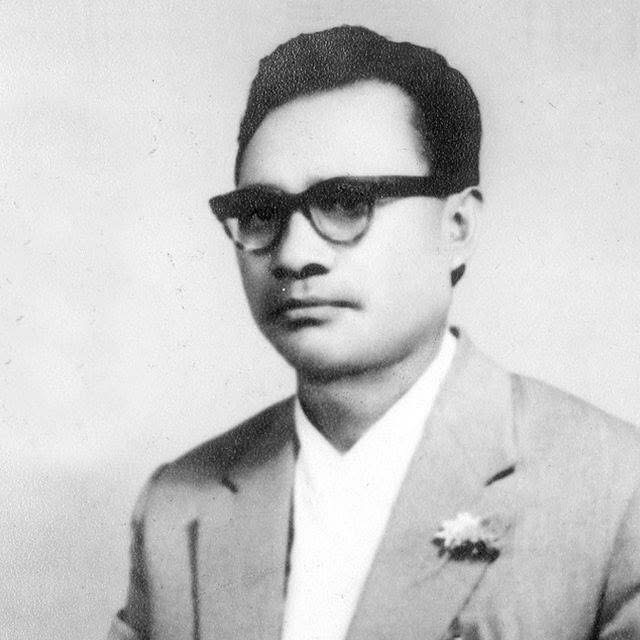
A Forgotten Chapter of Nepal’s Struggle for Freedom
Nepal’s history is often told through kings, prime ministers, and treaties. But the soul of the nation lives in quieter stories — in hidden notebooks, in prison cells, and in families that waited without answers. One such story is that of Dharma Ratna Yami, a man who resisted tyranny not with weapons, but with words, endurance, and unbreakable dignity.
Life Under the Rana Regime
For 104 years (1846–1951), Nepal lived under the autocratic rule of the Rana prime ministers. Power remained within one family, while the king was reduced to a symbolic figure. Ordinary people were kept away from education, denied political rights, and discouraged from independent thought.
Books were censored. Printing presses were monitored. Political ideas were criminalized. Prison was not about justice — it was about fear. Political prisoners were chained, starved, and denied medical care. Diseases like tuberculosis spread quietly through overcrowded cells. The purpose was not reform, but slow destruction.
Writing in Secret
In prison, inmates were permitted only one book — a religious text. The authorities believed such material was harmless. Dharma Ratna Yami proved them wrong.
He wrote secretly inside the pages of that sacred book, turning margins into a diary of truth. It was an act of extraordinary courage. If discovered, the consequences could have been severe. Torture. Solitary confinement. Even death.
But he continued. When a man cannot speak, writing becomes breathing. Dharma Ratna Yami was not merely a writer; he was a quiet revolutionary in an age when even words were treated as enemies of the state. During Nepal’s Rana regime, political repression extended beyond physical imprisonment into the realm of culture, language, and thought. Books were banned, speech was monitored, and the native languages of the people—especially Nepal Bhasa (Newari)—were systematically suppressed.
Yet even in these dark conditions, Dharma Ratna Yami continued to write. When paper was unavailable and books were forbidden, he secretly used religious texts—the only reading material permitted in jail—to record his thoughts and experiences. His writings were not stored in notebooks but hidden between the lines of spiritual volumes, camouflaged as devotion while containing rebellion. Not only writing, but even communication with family was closely controlled. Messages could not be sent openly. When family members attempted to bring spices like jeera (cumin) or marich (black pepper), they were allowed only if these were wrapped in leaves—ensuring no written message could pass through. Despite these humiliations and constant surveillance, Yami persisted.
Publishing Was an Act of Resistance
During Dharma Ratna Yami’s time, publishing in Newari (Nepal Bhasa) was not merely a literary activity—it was an act of political courage. The Rana regime had created an atmosphere of fear in which printers, publishers, and writers alike faced serious consequences for promoting indigenous languages and ideas. Because of this risk, many publishers refused to touch Newari manuscripts, no matter their merit.
In response, a group of culturally conscious individuals united to protect and promote Newar literature in defiance of suppression. This collective effort received vital support from Bal Krishna Shrestha, the grandfather of B. K. Man Singh’s father-in-law, who sponsored and encouraged the publication of Newar writers at a time when doing so could invite punishment. His contribution made it possible for suppressed voices to reach the public through Chosa Pasa banner and helped lay the foundation for the survival of Nepal Bhasa literature.
The cost of this repression is clearly reflected in Dharma Ratna Yami’s own life. His book Sandeya Lisa, though written a full ten years before its release, remained unpublished for a decade due to fear, censorship, and political pressure. When it finally appeared in print, it stood not just as a literary work but as a symbol of endurance, resistance, and cultural survival.
Hunger, Illness, and Survival
Jail stripped prisoners of basic human needs. Dharma Ratna Yami endured chronic hunger, weakened by malnutrition. Over time, his body failed him. He contracted tuberculosis — a disease that thrives where hunger and neglect rule.
Yet even then, he refused to surrender to helplessness.
He was skilled in knitting and used his talent inside prison walls. He made woolen items by hand and sold them within the jail, earning survival not with begging, but with skill. In a world designed to reduce him to nothing, he still created.
Visits in Chains
Family visits were among the most painful moments of imprisonment.
When Dharma Ratna Yami was brought to the prison gate, his hands and legs were bound in thick metal chains. The noise of iron dragging across stone announced suffering before he could speak. His walk was heavy. His body broken. His dignity untouched. His family returned home in tears, unable to remove the memory of chains from their minds. Not all suffering is visible to history. Some is carried silently in families for generations.
A Man Inside a Nation’s Timeline
The Rana timeline shows political events: the Kot Massacre (1846), the rise of Chandra Shumsher, the emergence of Praja Parishad, the executions of 1941, and finally the fall of the regime in 1951. But Dharma Ratna Yami’s life tells us what those dates meant in reality.
When education was restricted, he wrote.
When books were forbidden, he made one inside another.
When freedom demanded chains, he paid the price.
Democracy did not arrive suddenly in 1951. It was written slowly — by hands in captivity, by minds that refused to submit, by hearts that suffered quietly.
Why His Story Matters Today
Dharma Ratna Yami is not only a name from the past. He is a reminder.
A reminder that freedom is fragile.
A reminder that ideas cannot be jailed forever.
A reminder that one determined voice is stronger than an empire of fear.
His life proves that resistance does not always roar. Sometimes it whispers. Sometimes it stitches. Sometimes it writes between the lines.
Final Reflection
Nepal owes its breath today to those who suffocated yesterday so others would not. He never led an army. But he fought in the darkest of places — inside a cell where silence was enforced and truth was illegal. And he won. Not because he walked free. But because his words did.