The Political Backdrop: Rebellion Under Autocracy
To understand why Dharma Ratna Yami was viewed by society as a high-risk suitor, one must look to the oppressive political climate of Kathmandu in the 1930s and 1940s. Nepal was under the absolute hereditary rule of the Rana oligarchy, a regime that strictly prohibited political dissent, freedom of speech, and even unauthorized public education.
Dharma Ratna was not merely a young man facing financial ruin; he was an ardent social reformer, intellectual, and revolutionary actively working to dismantle this autocracy. His progressive stance against the rigid caste system, his advocacy for the marginalized, and his defiance of the state brought him into immediate conflict with the authorities. In the eyes of the Rana administration, his ideas were dangerous. Consequently, his life became a cycle of political activism, sudden raids, and frequent imprisonments. For a wealthy, traditional family prioritizing safety and state alignment, an alliance with such a marked man was seen as an invitation to ruin.
The Great Collapse and Diaspora
This political vulnerability was compounded by severe economic devastation. Following the bankruptcy of the family patriarch, Ratna Das Tuladhar, the family’s material wealth was entirely liquidated, leaving them without even a single brick of property to their name. This financial collapse forced a painful structural diaspora within the household.
The four sons of Ratna Das were forced to seek shelter at the home of his eldest daughter (the mother of the revered writer Chittadhar "Hridaya"), while their wives and young children were displaced, returning to their respective maternal homes for basic survival. It was against this backdrop of absolute destitution and socio-political upheaval that a definitive union would be tested.
The Rejected Alliance
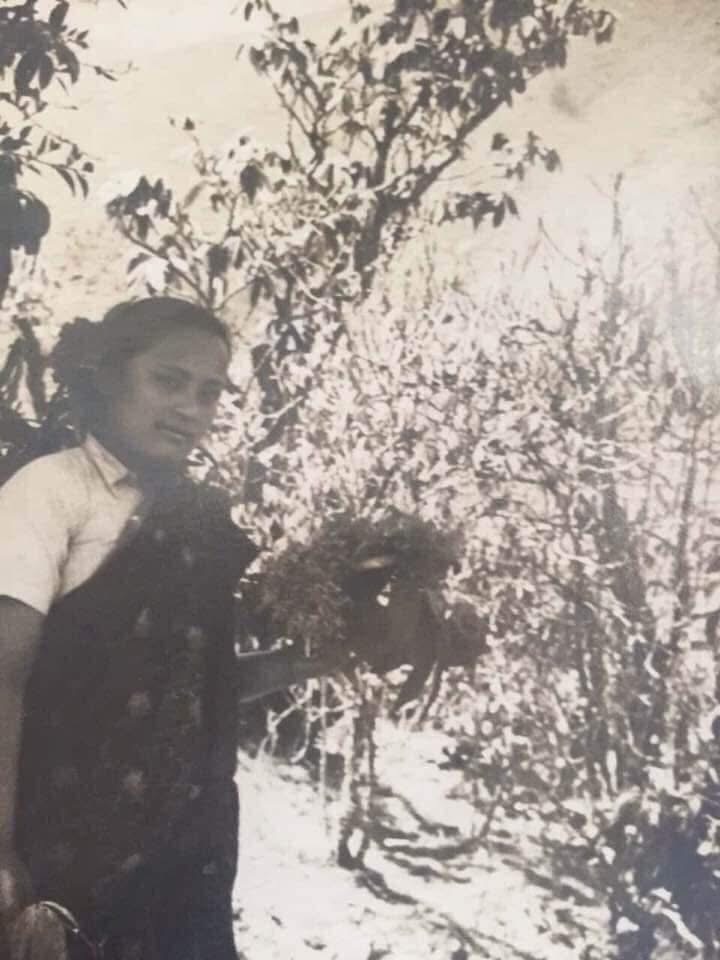
During this period of displacement, a marriage proposal was initiated by the step grandmother of the maternal branch of the Dharma Ratna's family. The intended bride was Hiradevi Kansakar, the daughter of a wealthy and prominent Lhasa Newar merchant family. However, the Kansakar family flatly rejected the alliance. From their perspective of stability and prestige, a union with Dharma Ratna was completely untenable. They questioned how they could hand over their daughter to a man who possessed no land, no physical property, and whose fierce political convictions resulted in constant surveillance and routine jail sentences.
For three long years, Dharma Ratna waited, hoping to secure the family's blessing and honorably bring Hiradevi into his life. Yet, as the political and economic barriers remained unyielding, it became clear that conventional pathways would never grant them their union.
The Flight to Sankhu
Faced with a permanent impasse, Dharma Ratna resolved to take a monumental risk. Choosing love and shared conviction over societal approval, he and Hiradevi made the definitive choice to elope.
In the 1930s and 1940s, traveling to Sankhu was not the brief journey it is today; it was an arduous, distinct trek to the physical edge of the Kathmandu Valley. For a political dissident under constant surveillance, this ancient Newar town offered both a literal and symbolic sanctuary—a vital breathing space away from the immediate grip of Rana spies in the capital. By taking this step, Hiradevi traded the material luxury and protective cocoon of her prominent merchant upbringing for a life of absolute uncertainty, transforming her shared conviction into an active, courageous practice.
The defiance of their union, however, triggered an immediate and furious reaction. Incensed by the elopement, Hiradevi’s family launched a massive, relentless hunt across the region to track them down. With the family closing in and the ever-present threat of the Rana authorities looming, the couple found an unexpected shield within the sacred geography of the town.
The head priest of Sankhu’s historic temple complex—recognizing the purity of their bond and sympathetic to the young revolutionary—took an immense risk of his own. He concealed the young lovers deep within the inner recesses of the temple. For fourteen tense days, as search parties combed the surrounding streets and hillsides, the temple walls became a crucible of survival. Hidden in the shadows of the sanctuary and sustained solely by the discretion of the priest, Dharma Ratna and Hiradevi endured a fortnight of total isolation.
This period of hiding was where their historic partnership was truly forged. Cut off from the world, relying entirely on each other's resilience, they emerged from those fourteen days no longer as vulnerable fugitives running from ruin, but as a unified force—tempered, resilient, and ready to face the gathering political storms that would eventually pull them back into the center of Nepal’s revolutionary struggle.