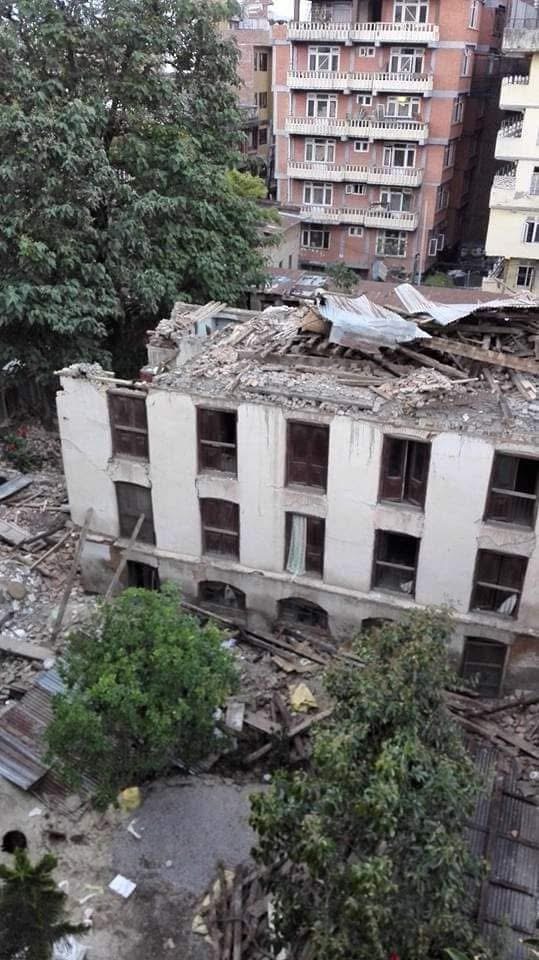
The 2015 Nepal earthquake—also known as the Gorkha earthquake—struck at 11:56 NST on April 25 with a magnitude of (or ) and a maximum Mercalli Intensity of IX (Violent). It killed nearly 9,000 people and injured approximately 22,000 across the nation. Among the thousands of structures affected was our historic ancestral home in Budhankhel (Ward No. 18), Kathmandu—a building known as Yami Chhen, which had previously survived the devastating 8.4 Richter scale earthquake of 1934.
A Sanctuary for Regional Intellectuals
Yami Chhen belonged to my father, the scholar, writer, and public intellectual Dharma Ratna Yami. The house served as a vibrant hub for some of South Asia’s greatest minds. Among its notable historic visitors was Mahapandit Rahul Sankrityayan, who traveled extensively with my father from India to Lhasa, Tibet, where they lived together. Rahuljee later stayed at Yami Chhen for a month while writing my father's biography.
Another towering figure to reside in our home during his visit to Nepal was Dr. B.R. Ambedkar, the architect of the Indian Constitution and icon of social justice.
The Quiet Fortitude of Heera Devi Yami
The daily management of this historic home fell entirely to my late mother, Heera Devi Yami. A freedom fighter who fought to overthrow the autocratic Rana regime and a founding member of the Nepal Women’s Association, she was the financial backbone of our family.
To manage the household and educate her seven children, she turned Yami Chhen into a source of rental income. Whenever funds ran short, she sought the counsel of traditional Nepali builders, who advised adding concrete upper structures over the older, traditional building materials to create cleaner, modern spaces.
By taking charge of every domestic and financial tension, she insulated my father completely, allowing him to devote his life to the development of Nepal, his passion for writing, and his public lectures across Nepal and India. Tragically, she passed away in 1970 at the young age of 49.
The Tragedy of April 25, 2015
When the earthquake struck on April 25, the structural vulnerabilities of these historical modifications were exposed. The interior sections of all five floors of the building's western wing collapsed inward.
On the ground floor, four of our tenants attempted to flee. However, the violent, heavy movement of the building buckled the door latch, trapping them inside. They were later recovered from the debris, tragically found dead with their hands still on the locked latch, buried beneath the weight of the collapsed upper floors.
Concurrently, my elder brother, Vidhan, who was battling lung cancer at the time, was on the third floor with his wife, son, and daughter. Utilizing his expertise as a civil engineer, he instantly identified the structurally safest zone within the shifting building. Thanks to his quick, decisive judgment, all four family members survived the catastrophic collapse, escaping with minor injuries.
Cumulative Destruction and Aftershocks
The initial April 25 tremor left a neighboring building severely tilted and on the verge of collapse. Over the next several weeks, relentless aftershocks rippled through Nepal at intervals of 15 to 20 minutes.
On May 12 at 12:54:08 NST, a powerful 6.7 Richter scale aftershock delivered the final blow, bringing the compromised neighboring structure down entirely. It crashed directly into our compound. Ironically, the property had been purchased by its new owner just a couple of months prior to the disaster.
By June 7, 2015, seismologists had recorded over 304 aftershocks—a high frequency that experts concluded was a geologically normal sequence for a seismic event of this magnitude. While the physical structure of Yami Chhen was profoundly altered, the history, memories, and resilience of the family who built it endure.
---------------------NOTE ---------------------------
Please note that the Nepali version of this article was translated using an AI tool and may require further editing. Readers are kindly advised to review the translation with care.
कृपया ध्यान दिनुहोला, यस लेखको नेपाली संस्करण एउटा एआई (AI) उपकरण प्रयोग गरेर अनुवाद गरिएको हो र यसमा थप परिमार्जन (सम्पादन) आवश्यक हुन सक्छ। पाठकवर्गलाई नेपाली अनुवाद सावधानीपूर्वक पढिदिनुहुन हार्दिक अनुरोध छ।
____________________________________________________________________
वि.सं. २०७१ (सन् २०१५) को नेपाल भूकम्प—जसलाई गोरखा भूकम्प भनेर पनि चिनिन्छ—नेपाली समय अनुसार वैशाख १२ गते दिनको ११:५६ बजे ७.८ (वा ८.१ ) को मान र अधिकतम ९ मर्कली तीव्रता (विनाशकारी) का साथ गएको थियो। यसले देशभर झन्डै ९,००० मानिसको ज्यान लियो र लगभग २२,००० जनालाई घाइते बनायो। यसबाट प्रभावित भएका हजारौँ संरचनाहरूमध्ये काठमाडौँको बुढानखेल (वडा नं. १८) मा रहेको हाम्रो ऐतिहासिक पैतृक घर पनि एक थियो—'यामी छें' नामले चिनिने यो भवनले यसअघि वि.सं. १९९० (सन् १९३४) को विनाशकारी ८.४ रेक्टर स्केलको महाभूकम्पलाई समेत झेलेको थियो।
क्षेत्रीय बुद्धिजीवीहरूको एउटा थलो
यामी छें मेरा पूजनीय बुबा, विद्वान, लेखक तथा सार्वजनिक बुद्धिजीवी धर्मरत्न यामीको घर थियो। यो घर दक्षिण एसियाका केही महान् मस्तिष्कहरूका लागि एउटा जीवन्त केन्द्रका रूपमा रहेको थियो। यहाँ आउने उल्लेखनीय ऐतिहासिक पाहुनाहरूमध्ये महापण्डित राहुल साङ्कृत्यायन हुनुहुन्थ्यो, जसले मेरा बुबासँग भारतदेखि ल्हासा (तिब्बत) सम्मको कठिन यात्रा गर्नुभएको थियो र त्यहाँ उहाँहरू सँगै बस्नुभएको पनि थियो। पछि राहुलजीले मेरा बुबाको जीवनी लेख्ने क्रममा एक महिनासम्म यामी छेंमै बिताउनुभएको थियो।
भारतीय संविधानका निर्माता एवं सामाजिक न्यायका प्रणेता डा. बी.आर. अम्बेडकर पनि नेपाल भ्रमणका क्रममा हाम्रो यसै घरमा बस्नुभएको अर्का महान् व्यक्तित्व हुनुहुन्थ्यो।
हीरादेवी यामीको मौन दृढता
यस ऐतिहासिक घरको दैनिक व्यवस्थापनको सम्पूर्ण जिम्मेवारी मेरी स्वर्गीय आमा हीरादेवी यामीको काँधमा थियो। निरङ्कुश राणा शासनको अन्त्यका लागि लडेकी एक स्वतन्त्रता सेनानी एवं नेपाल महिला सङ्घको संस्थापक सदस्य रहनुभएकी आमा हाम्रो परिवारको मुख्य आर्थिक खम्बा हुनुहुन्थ्यो।
घरव्यवहार चलाउन र आफ्ना सात जना छोराछोरीलाई शिक्षित बनाउन उहाँले यामी छेंलाई भाडाको आम्दानीको स्रोतमा बदल्नुभयो। जब-जब रकमको अभाव हुन्थ्यो, उहाँले नेपालका पुराना परम्परागत डकर्मीहरूको सल्लाह लिनुहुन्थ्यो, जसले सफा र आधुनिक ठाउँ बनाउनका लागि पुराना परम्परागत निर्माण सामग्रीहरूमाथि कंक्रिटका थप कोठाहरू (संरचना) थप्ने सल्लाह दिएका थिए।
घरायसी र आर्थिक तनावको हरेक बोझ आफैँले उठाएर उहाँले बुबालाई यी सबै चिन्ताबाट पूर्ण रूपमा मुक्त राख्नुभयो, जसका कारण बुबाले आफ्नो सम्पूर्ण जीवन नेपालको विकास, पुस्तक लेखनप्रतिको रुचि र नेपाल तथा भारतका सार्वजनिक कार्यक्रमहरूमा प्रवचन दिनका लागि समर्पित गर्न सक्नुभयो। दुर्भाग्यवश, वि.सं. २०२७ (सन् १९७०) मा मात्र ४९ वर्षको अल्पायुमै उहाँको निधन भयो।
वैशाख १२, २०७२ को त्रासदी
जब वैशाख १२ गते भूकम्प गयो, ऐतिहासिक समयमा गरिएका यी थपघट र संरचनागत कमजोरीहरू सतहमा आए। भवनको पश्चिमी खण्डका सबै पाँचै तलाका भित्री भागहरू भत्किएर भित्रै थुप्रिए।
भुइँतलामा रहेका हाम्रा चार जना बहालवालाहरू (डेरावाल) बाहिर भाग्ने प्रयास गर्दै थिए। तर, भवनको तीव्र र भयानक कम्पनका कारण ढोकाको गेडिवाला चुकुल (Latch) बङ्गियो, जसले गर्दा उनीहरू भित्रै थुनिए। पछि उनीहरूलाई भग्नावशेषबाट निकालिएको थियो; भत्किएका माथिल्ला तलाहरूको वजनमुनि पुरिएका उनीहरू दुःखद रूपमा लक भएको चुकुलमै हात समातेको अवस्थामा मृत फेला परेका थिए।
त्यही समयमा, मेरा जेठा दाइ विधान, जो त्यसबेला फोक्सोको क्यान्सरसँग जुधिरहनुभएको थियो, आफ्नी श्रीमती, छोरा र छोरीका साथ तेस्रो तलामा हुनुहुन्थ्यो। एक सिभिल इन्जिनियर हुनुको नाताले उहाँको प्राविधिक चेत तत्काल सक्रिय भयो र हल्लिरहेको भवनभित्र संरचनागत रूपमा सबैभन्दा सुरक्षित क्षेत्र कुन हो भनेर उहाँले तुरुन्तै पहिचान गर्नुभयो। उहाँको यही द्रुत र निर्णायक निर्णयका कारण परिवारका चारै जना सदस्य सो विनाशकारी भत्काइबाट बच्न सफल भए र सामान्य चोटपटकका साथ मात्र बाहिर निस्किए।
क्रमिक विनाश र परकम्पहरू
वैशाख १२ गतेको मुख्य कम्पनले छिमेकीको एउटा भवनलाई नराम्ररी ढल्काएर पूर्ण रूपमा भत्किने अवस्थामा पुर्याएको थियो। त्यसपछिका केही हप्ताहरूमा नेपालभर प्रत्येक १५ देखि २० मिनेटको अन्तरालमा निरन्तर परकम्पहरू गइरहे।
वैशाख २९ गते (मे १२) दिउँसो १२:५४:०८ बजे गएको ६.७ रेक्टर स्केलको शक्तिशाली परकम्पले सो कमजोर बनिसकेको छिमेकीको भवनलाई पूर्ण रूपमा ढलाएर अन्तिम धक्का दियो। त्यो भवन सिधै हाम्रो कम्पाउन्डभित्र खस्यो। विडम्बनाको कुरा, त्यो घर सो धनीले विपत्ति आउनुभन्दा केही महिना अघि मात्रै किनेका थिए।
जुन ७, २०१५ सम्ममा भूगर्भविद्हरूले ३०४ भन्दा बढी परकम्पहरू रेकर्ड गरिसकेका थिए—यस प्रकारको उच्च आवृत्तिको परकम्पलाई विशेषज्ञहरूले यति ठुलो भूकम्पीय घटनापछि आउने एक सामान्य भूगर्भीय प्रक्रिया भएको निष्कर्ष निकाले। यामी छेंको भौतिक संरचना आज पूर्ण रूपमा परिवर्तन भइसकेको भए तापनि यसलाई निर्माण गर्ने परिवारको इतिहास, सम्झना र दृढता भने सधैँ अमर रहनेछन्।