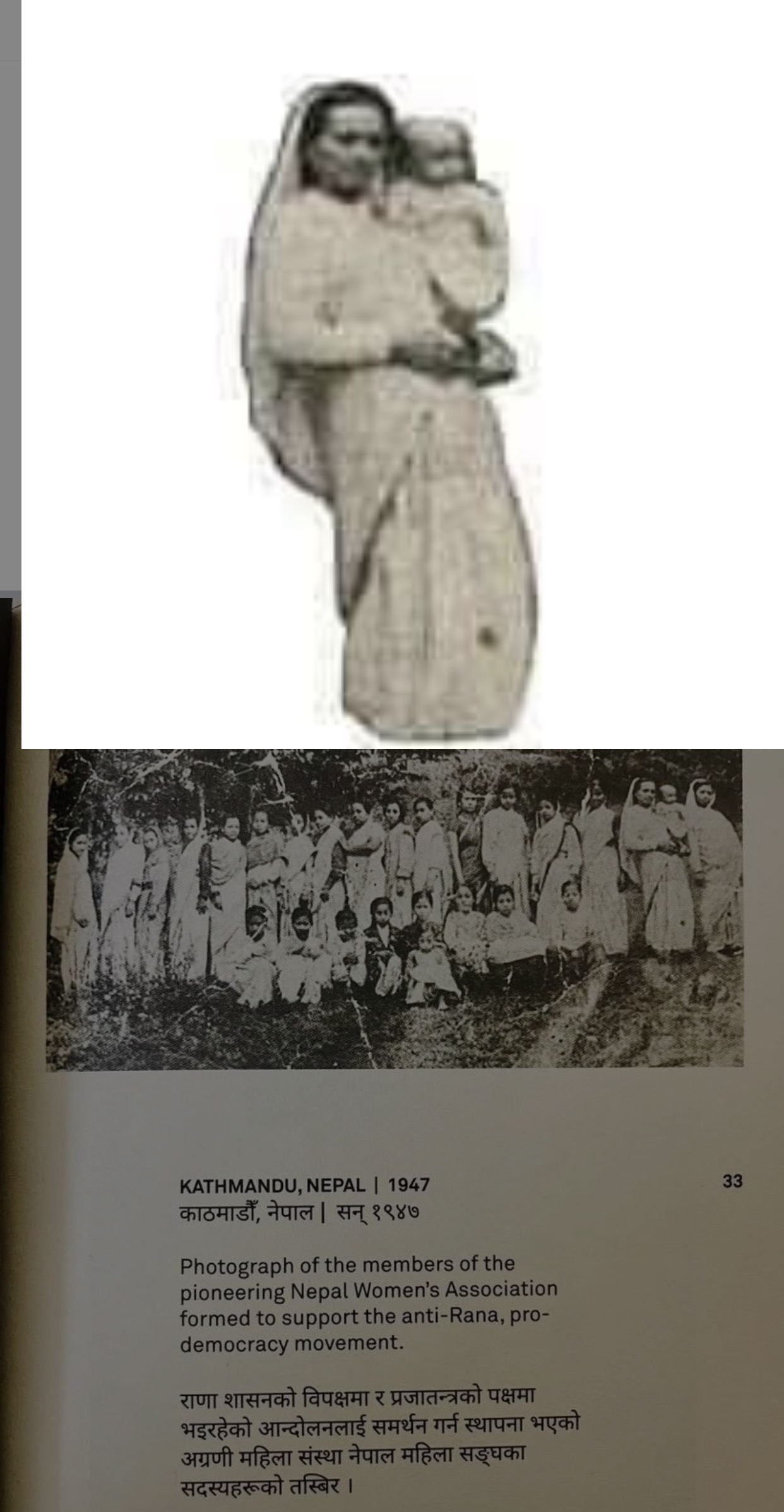
Political history often remembers speeches, prisons, and public victories. What it forgets are the private battles—especially those carried by women. Heera Devi Yami’s life reminds us that courage is not only exercised in public, but also in silence, intelligence, and sustained moral resolve.
Long before 1950, when Nepal was still under the Rana regime, Heera Devi Yami played a crucial yet invisible role in the underground political movement. At immense personal risk, she hid underground activists, fed them, protected them, and helped resolve conflicts among them. These were not simple acts of sympathy; they required sharp judgment, secrecy, and exceptional intelligence. Every decision carried the risk of arrest, imprisonment, or worse—not only for herself, but for her children and those she sheltered.
Heera Devi Yami’s courage was tested not only by political danger but by daily humiliation. In a society ruled by fear, women themselves were often turned into tools of abuse. Women living along the roadside were deliberately misled and encouraged to harass her when she walked with her infant children. From verandahs and doorways, water was thrown at her, and insults followed her steps.
Ordinary streets became places of public shaming, where she faced systematic harassment fueled by the regime’s efforts to isolate her and erode her influence.
Instead of being honored for her courage and intelligence, her strength was used against her. Yet she endured—holding together a family, a resistance network, and her dignity in conditions meant to destroy all three.
This cruelty did not arise on its own. It was fed by rumors, false information, and fear in a society that was uneducated, tightly censored, and cut off from any independent media. People lived under terror, and fear was easily turned into hatred. Heera Devi Yami endured this abuse while carrying her children and continuing her dangerous underground responsibilities.
At the same time, she was secretly moving underground activists from one hiding place to another—often male activists—under extremely risky conditions. People were terrified to give shelter, knowing the Rana regime publicly punished and even killed those involved. Yet she managed these movements with care, intelligence, and secrecy, risking not only her own life but the lives of her children.
Heera Devi Yami was also in charge of the movement’s most dangerous work: intelligence and dissemination. To distribute handwritten secret information and pamphlets, she often disguised herself in peasant dress, covering her head and moving through the night like an elderly woman. Beyond this, she was a protector of activists, hiding and feeding them in safe houses—often while carrying her infant children. Collecting resources for these activists was a grueling task in a society paralyzed by fear, yet she managed these movements with sharp intelligence and absolute secrecy.
Heera Devi Yami’s story highlights a side of political history that is often overlooked: the quiet, sustained moral resolve of women who operated in the shadows to make larger political changes possible. She did all of this without public recognition at the time, enduring both the psychological toll of isolation and the physical dangers of the resistance.
Despite public humiliation, mental abuse, and constant danger, she did not stop. She absorbed the cruelty in silence so that others could remain safe.
She carried out this work quietly, without recognition, in a society that neither acknowledged women’s political contributions nor understood the dangers they faced. Her courage operated behind closed doors, under constant fear, long before political change became visible or celebrated.
Within the closest circle of Dharma Ratna Yami’s family, however, some relatives quietly worked against her. Deeply absorbed in writing, political struggle, and resisting injustice, Dharma Ratna Yami had little time to recognize how manipulation was being carried out within his own family. The cost of this neglect was borne by Heera Devi Yami.
Rather than being respected for her intelligence and sacrifice, her underground work was weaponized against her. Certain relatives used mental abuse, spread wrong information, disinformation, and deliberate misinformation to tarnish her image. Her competence and independence—qualities rarely tolerated in women at the time—were recast as reasons for suspicion and hostility.
During the years when Dharma Ratna Yami lived underground, Heera Devi Yami suffered in isolation. Society, largely uneducated and indifferent to the sacrifices of political families, failed to understand the fear, loneliness, and emotional strain she endured. Her pain remained invisible, dismissed as private hardship rather than recognized as political sacrifice.
After 1950, when the Rana regime fell and Dharma Ratna Yami entered public and political life, the attacks against Heera Devi Yami intensified rather than diminished. People seeking influence and control realized that weakening a political leader could be achieved by destabilizing his personal life. They played on misunderstandings, distorted intentions, and used every possible tactic to emotionally torture, manipulate, and sideline Heera Devi Yami—so that they could gain easier access to Dharma Ratna Yami.
These efforts aimed to break her away from her husband and erase her influence altogether. The violence she faced was not physical, but psychological, sustained, and deeply damaging.
This painful reality was later documented by Lani Devi Tuladhar, Dharma Ratna Yami’s first cousin and the daughter of his maternal aunt. In her article published in the Smriti Grantha in B S 2046, she described how relatives and political actors deliberately created conflict between Dharma Ratna Yami and Heera Devi Yami. Her testimony confirms that these events were neither accidental nor imagined, but systematic and intentional.
At the time, Heera Devi Yami’s children were too young to understand the complexity of these forces. Only years later, after her passing, did they learn—through such testimonies—the depth of what their mother had endured in silence.
Heera Devi Yami’s story urges us to look beyond celebrated political figures and recognize the women whose intelligence, labor, and courage sustained political movements. Her life stands as a reminder that moral strength lived daily, under pressure, is itself a powerful form of resistance.