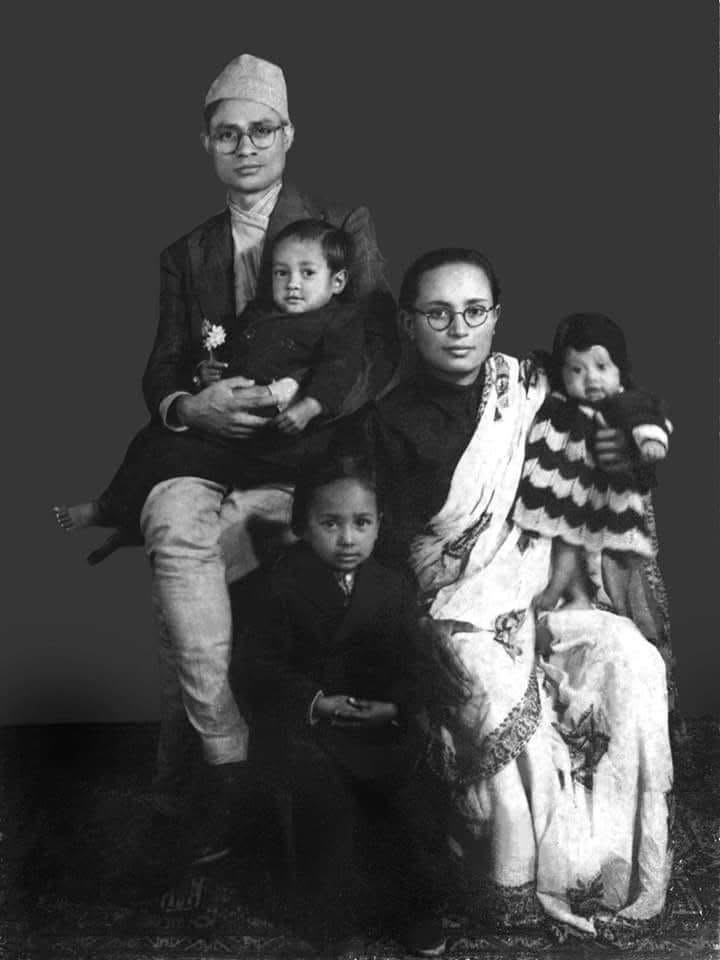
Under the suffocating tyranny of the Rana regime (1846–1951), Nepal was ruled with absolute power concentrated in the hands of hereditary prime ministers. Ordinary citizens lived in fear, education was restricted, and any dissent was met with brutal punishment. Yet in these darkest days, women like Heera Devi Yami emerged as courageous agents of change — defying social norms, challenging political repression, and risking life and liberty to plant the seeds of freedom in the hearts of Nepalese people.
With her infant child Dharma strapped securely to her back, Heera Devi Yami embarked on long, perilous journeys through the streets of Kathmandu, carrying leaflets and pamphlets strictly forbidden by the Rana regime. Her route took her from Singha Durbar—the heart of Rana power—through Masanghat, onward to Shankhamul, and finally to Patan and other parts of the valley. By the time she arrived, darkness had already fallen, yet her work was far from over. She continued the responsility during the pregnancy and birth of son Vidhan and during the pregnancy of third child Timila. Many witnesses still speak with tearfull voices when they remember Heera Devi Yami on the roads of Kathmandu. They remember her not as a distant political figure, but as a fragile-looking woman walking for hours through hostile streets, an infant bound tightly to her back one being dragged and one inside the stomach, her steps hurried yet determined. Every alley she crossed carried danger. Every knock of a boot, every unfamiliar voice could mean arrest, torture, or worse. And yet, she walked on. Some stood frozen in verandahs, afraid even to show sympathy. Others later confessed that they wanted to help but were paralyzed by terror. The regime had taught them that compassion itself was a crime.
What haunted witnesses most was not only the political risk, but the unbearable human cost. She was a mother, her body often weak from hunger, childbirth, and exhaustion. At times, her clothes were thin against the cold, her strength visibly failing, yet the child on her back slept, trusting her completely. That image—of a mother carrying both a revolution and a baby—left lifelong scars on those who saw it.
There were moments of cruelty that people still struggle to describe. Influenced by propaganda, some were incited to insult her, even to throw stones from roadside verandahs. Witnesses recall the shame they felt afterward—how a woman already carrying so much pain became a target of fear-driven hatred. She did not shout back. She did not stop. She simply lowered her head and kept walking.
After childbirth of son Vidhan, when she should have been resting, she was arrested—bleeding, weak, and exposed to the bitter winter cold. People saw her left outside building during peak winter for days, her newborn’s life hanging by a thread. The memory of that injustice still brings tears to those who speak of it. This was not an isolated act of bravery. Heera Devi carried out these missions repeatedly — during pregnancy, after childbirth, and while raising young children. When her son was still an infant, she walked for hours with his weight pressing against her back with two year old Dharma, her mind alert. Later, even while pregnant with her third child, Timila, she continued the work, refusing to step away from the movement that depended on secrecy and trust.
Today, when those witnesses speak, their voices break. They say they did not fully understand her strength then. Only later did they realize that what they saw was not just suffering—it was resistance in its purest form. Heera Devi Yami did not fight with weapons. She fought with her body, her motherhood, and her unyielding refusal to surrender dignity. For those who saw her on those roads, the pain she endured is unforgettable. Her courage reminds eyewitnesses that history is not shaped only by those who command armies or deliver grand proclamations. Sometimes, it is shaped by a woman walking alone at dusk, holding the future on her back, refusing to turn back even when the night closes in.
She was not spared cruelty from society either. Women, themselves misled and frightened by propaganda, were sometimes incited to hurl mental abuse at her as she passed — even throwing water from Varandas — while she walked with a child on her back. The humiliation cut deeply, but she did not stop. Silence, endurance, and resolve became her armor.
Under the Ranas, distributing handwritten political narratives was a grave crime, punishable by imprisonment, exile, or even death. Every street corner, every public thoroughfare, could hide informers or palace guards. A single misstep—being stopped, searched, or watched—could jeopardize not only her own safety but the entire underground network. Names of fellow activists, locations of safe houses, and plans for future operations depended on her vigilance with every step. The city, ruled by the iron grip of the Rana regime, was dense with fear. Soldiers, informers, and loyalists watched quietly from corners and verandahs.
Despite these dangers, Heera Devi moved with quiet determination. Her body bore the strain of hours of walking under the sun, while her mind stayed alert to the slightest hint of threat. Motherhood did not shield her; it accompanied her as a living, constant weight on her back. She balanced the care of her children with the focus of a revolutionary courier, moving through the city with courage, discretion, and unwavering resolve. Each journey was a delicate act of defiance, a lifeline for a movement that could collapse if information faltered. Through exhaustion, fear, and the ever-present shadow of capture, Heera Devi Yami carried forward the ideals of freedom, ensuring that the struggle against the Rana regime remained alive in the hearts of all she served.